July 16, 2026
EHO Inspections 101: What Do Environmental Health Officers Actually Look For?
The health inspector can arrive unannounced at any time. Discover the top 5 things EHOs check immediately - from fridge logs to uniforms - and how to avoid a Closure Order.
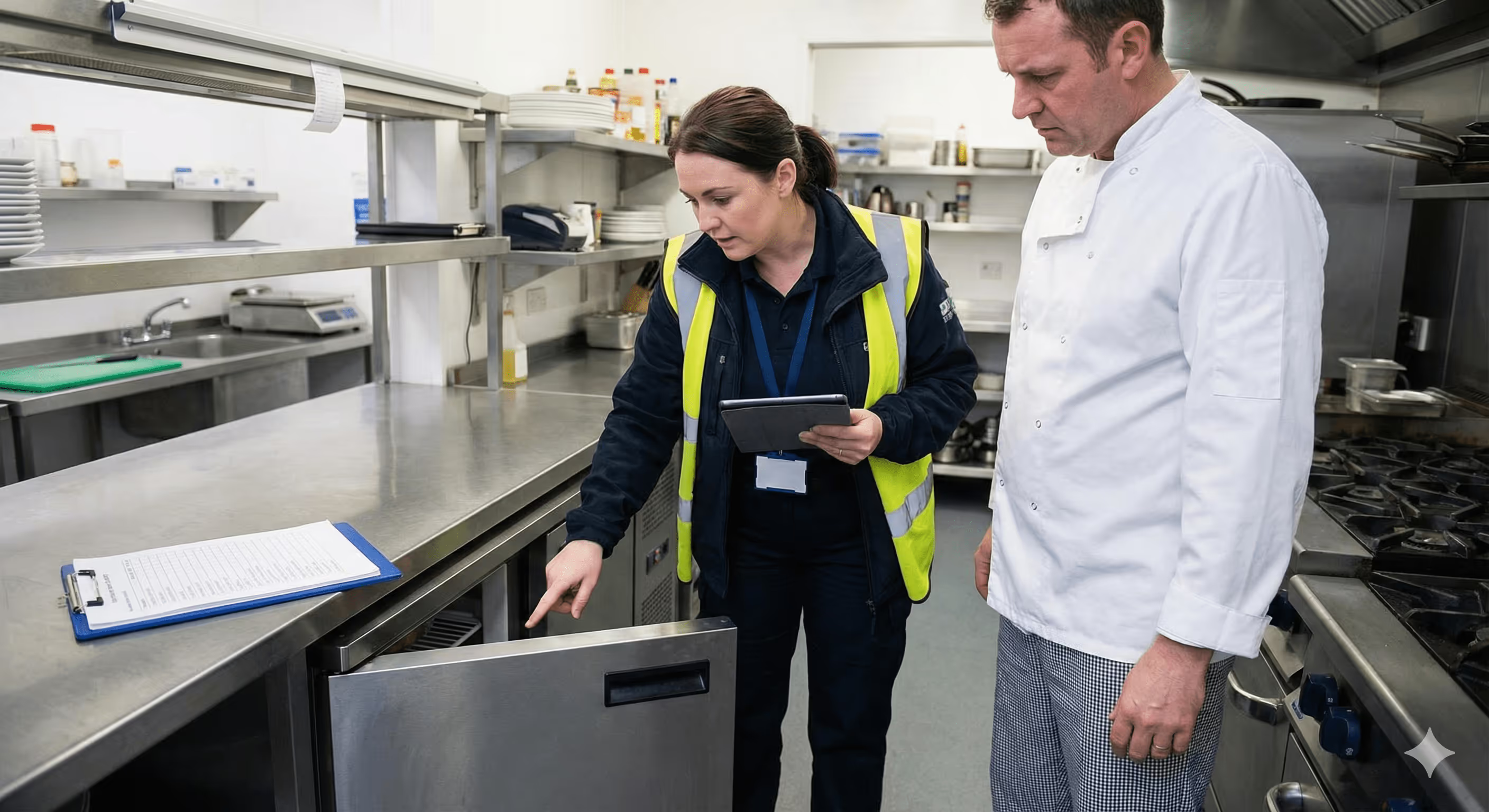
There is a specific kind of silence that falls over a kitchen when someone whispers, "The Health Inspector is here."
It doesn’t matter if you have three Michelin stars or you run a small coffee truck; the heart rate goes up. In Ireland, Environmental Health Officers (EHOs) from the HSE have the power to walk into your business unannounced, at any time. They can inspect your food, demand your records, interview your staff, and - in serious cases - serve a Closure Order that shuts you down immediately.
Unlike the UK system, where you might see "5 Star" stickers in every window, Ireland’s public system is far more punitive. If you receive a Closure Order, you aren't just closed for the weekend. Your business name and address are published on the FSAI website for three months.
That is a PR nightmare that gets picked up by local newspapers and stays on Google forever.
So, how do you make sure your next inspection is a breeze? You need to stop thinking like a chef and start thinking like an auditor. Here is a detailed breakdown of what they are actually looking for when they walk through your door.
1. The "First 5 Minutes" Impression
EHOs are human. They often make their decision on how the inspection will go within the first five minutes of entering your premises. If the first things they see are chaotic, they will dig deeper. If they see control, they might be more lenient.
- The Wash Hand Basin (WHB): This is the single biggest stumbling block. Is there a designated WHB? Is it legally accessible (i.e., not blocked by a delivery box or a bin)? Does it have hot water, soap, and paper towels?
- The Trap: If an EHO walks in and sees a colander of pasta draining in the hand wash sink, you are immediately in trouble. That sink is for hands only.
- Uniforms & Grooming: Are staff wearing clean protective clothing? Is hair tied back? Is anyone wearing excessive jewellery? If your staff look sloppy, the EHO assumes your food hygiene is sloppy too.
- The "Vibe": Is the kitchen calm and organised, or is it chaotic, dirty, and frantic? A calm kitchen suggests a controlled HACCP system.
2. Traceability (The "One Step" Rule)
Traceability is often where the "paperwork" headache begins, but it is vital for public safety. If there is a national recall on a specific batch of beef, you need to know immediately if you have it in your fridge.
If you are serving a beef burger, the EHO might ask: "Show me the invoice for this meat. When did it arrive? Who supplied it? What is the batch code?"
You legally need to be able to trace food one step back (to the supplier) and one step forward (to the customer, though for restaurants, the "sale" is the end point).
- The Golden Rule: If you have decanted food (e.g., chicken taken out of its original packaging and put into a tub) without a label, it is considered "untraceable." The EHO can, and will, ask you to throw it in the bin immediately.
3. Cross-Contamination & Physical Separation
This is a huge focus for Irish EHOs right now, particularly regarding E. coli O157.
They will look closely at your workflow. Do you have separate chopping boards? (Red for raw meat, yellow for cooked meat, green for veg, etc.). But coloured boards aren't enough anymore.
- The Space Issue: If you are prepping raw chicken on a bench right next to where you are assembling sandwiches, that is an immediate risk to public health via "splash back."
- The "Time Separation" Fix: If you have a small kitchen (like many cafés in Dublin or Cork), you may not have the luxury of separate prep rooms. You must use "Time Separation." This means you prep all raw meat before 10:00 am, then do a full deep clean and sanitise, and only then bring out the ready-to-eat foods. This procedure must be written down in your HACCP plan.
- The Equipment Trap: Watch out for complex equipment like vacuum packers and meat slicers. Unless you have two of them, you generally cannot use the same machine for raw and cooked foods, even if you clean it in between. It is too hard to disinfect the internal mechanics.
4. The "Danger Zone" (Temperature Control)
Bacteria love temperatures between 8°C and 63°C. Your job is to keep food out of this zone, and the EHO will be checking your equipment with their own probe to catch you out.
- Cold Holding: Your fridges should be running at 0°C–5°C. If an EHO probes a high-risk food item (like cooked ham) in your fridge and it reads 12°C, you have a serious problem.
- Cooking: You must prove you are cooking food to a core temperature of 75°C (or equivalent).
- Hot Holding: This is a classic failure point for carveries and delis. If that soup or sausage roll drops below 63°C for more than two hours, it is unsafe.
5. Structure & Cleaning (The Torch Test)
Chefs clean at eye level. EHOs clean with a flashlight. They will look underneath your equipment, behind the fridge, and into the seals of your dishwasher.
- The Fridge Seals: Pull back the rubber seal on your fridge door. Is it black with mould? That’s a common failure point.
- Broken Fabric: Are there cracked tiles? Is the paint peeling off the ceiling? Is the floor covering torn? You cannot clean a cracked tile effectively, which means it harbours bacteria. The EHO will demand a structural repair plan.
6. The Records (Evidence of Safety)
You can have the cleanest kitchen in Ireland, but if you didn't write it down, it didn't happen. In the eyes of the law, your records are your only defence. They will want to see:
- Delivery Records: Checking temps of food arriving.
- Fridge/Freezer Temps: Recorded twice daily.
- Cooking/Cooling Logs: Proving you hit that 75°C target and cooled food quickly (within 90 mins).
- The "Friday Fill-Out": EHOs are smart. If they see that the fridge records for the whole week are written in the exact same pen, with the exact same handwriting, all at once, they know you falsified them on a Friday. This is fraud and destroys your credibility.
7. Allergen Information
Since stricter laws came in, this is a major hot topic. You must have an accurate, written Allergen Matrix (listing the 14 allergens) available for customers.
"Ask the chef" is no longer a sufficient answer. What if the chef is busy? What if a relief chef is on duty who doesn't know the recipe? If a customer asks if a dish contains nuts, your staff need to be able to point to a written document that says "Yes" or "No."
Don't Wait for the "Surprise"
The best way to handle an EHO visit is to be prepared before they ever arrive. The stress of an inspection usually comes from not knowing what they will find.
At Beacon, we offer Mock EHO Audits. We come in and inspect your premises exactly like an officer would. We find the gaps - the broken tiles, the missing delivery dockets, the dodgy fridge seals - and we help you fix them before the real inspection happens.
Worried about your next inspection?
Book a Mock EHO Audit with Beacon today. We’ll find the problems before the inspector does.