July 16, 2026
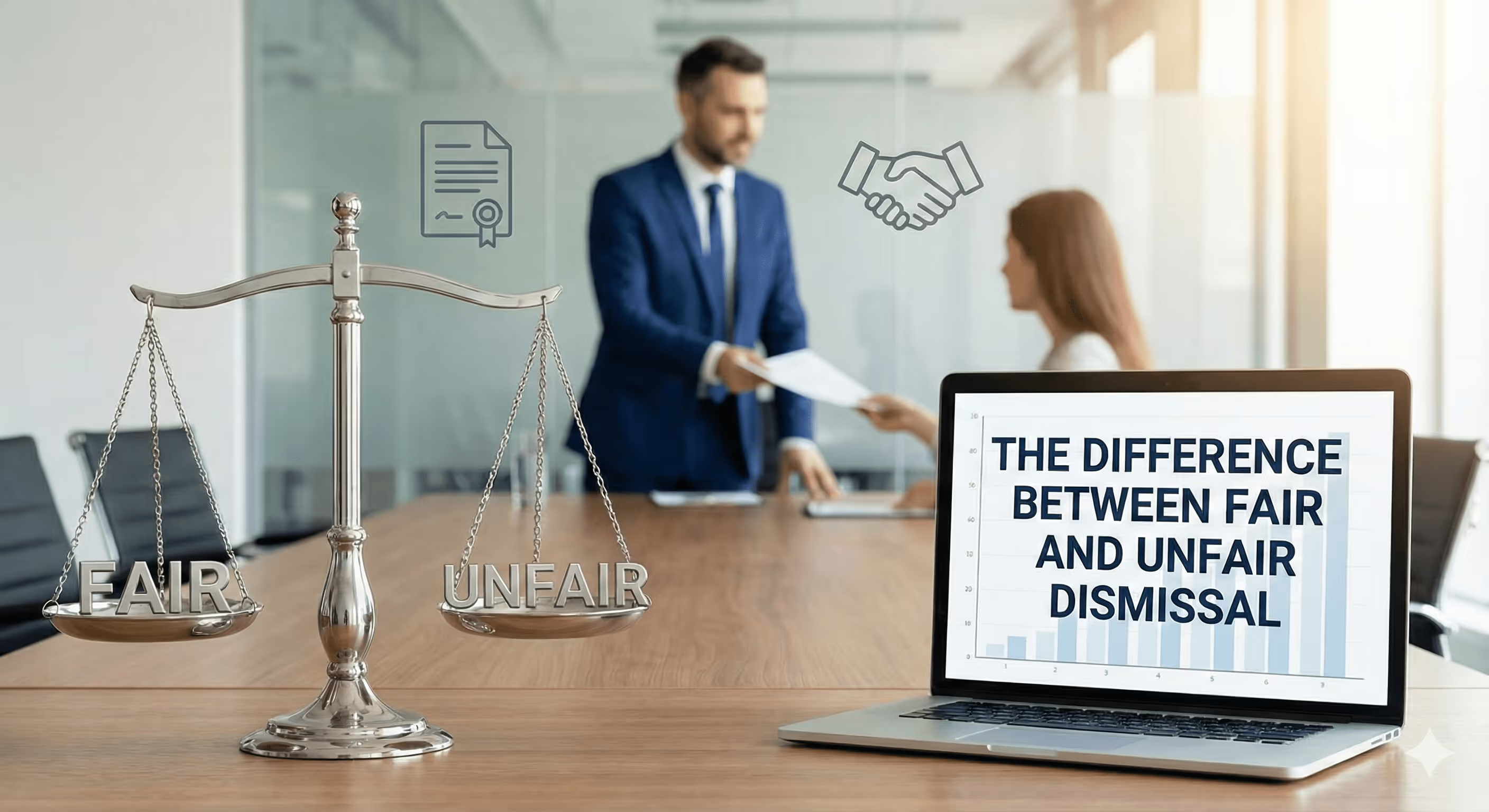
Navigating Employment Law: The Difference Between Fair and Unfair Dismissal
A guide for Irish employers on the Unfair Dismissals Acts. Learn the differences between fair and unfair dismissal, constructive dismissal, and the 6 fair grounds for terminating employment.
Working in Human Resources or managing a team offers immense satisfaction. There is genuine joy in identifying talent, onboarding new hires, and watching them grow within your organisation. From celebrating professional milestones to supporting staff through personal life events, the "human" side of business is often the most rewarding.
However, management also requires making difficult decisions. No employer enjoys initiating the process of termination, redundancy, or dismissal. Yet, parting ways with an employee is sometimes a necessary function of business machinery.
Whether due to conduct, capacity, or economic necessity, dismissal must be handled with rigorous professionalism. In Ireland, the line between a "fair" and "unfair" dismissal is strictly defined by law. For employers, failing to understand this distinction can lead to severe financial penalties, Workplace Relations Commission (WRC) sanctions, and lasting reputational damage.
Below, we break down exactly what employers need to know to remain compliant.
What Constitutes a Dismissal?
Under the Unfair Dismissals Acts 1977–2015, a dismissal occurs when an employer terminates a contract of employment. Whether you term it "letting someone go," "firing," or "termination," the legal result is the same.
According to the Workplace Relations Commission (WRC), dismissal generally covers:
- Termination of the contract by the employer (with or without notice).
- The expiration of a fixed-term contract without renewal (under specific circumstances).
- Constructive dismissal (where the employee resigns due to employer conduct).
It is important to distinguish dismissal from other forms of exit, such as voluntary resignation or standard retirement, as these do not typically carry the legal risks associated with termination.
Because involuntary job loss has a profound impact on an individual’s financial stability and mental health, Irish law is heavily weighted to protect the employee. Therefore, the burden of proof usually falls on the employer to demonstrate that the dismissal was fair.
Understanding Unfair Dismissal
A dismissal is deemed automatically unfair if it is based on grounds protected by Irish employment equality legislation. Regardless of the procedure followed, you cannot dismiss an employee for reasons related to:
- Trade Union Membership: Engaging in union activities (inside or outside working hours).
- Protected Characteristics: Race, colour, sexual orientation, age, religion, or membership of the Traveller community.
- Pregnancy and Family Rights: Any matters connected to pregnancy, breastfeeding, or availing of rights to maternity, paternity, adoptive, or carer’s leave.
- Legal Proceedings: If the employee is suing the employer or acting as a witness in proceedings against the employer.
- Whistleblowing: Making a protected disclosure regarding wrongdoing within the company.
- Political Opinion: The employee's political affiliations or beliefs.
If a dismissal is found to be based on any of the above, there is no defense of "reasonableness" available to the employer.
What is Constructive Dismissal?
Constructive dismissal is a complex area where the employee resigns, but the law treats it as a dismissal. This occurs when an employer’s conduct represents a significant breach of the employment contract, leaving the employee with no reasonable choice but to leave.
Examples of conduct that may lead to a claim of constructive dismissal include:
- Unilateral reductions in pay or demotion without agreement.
- Allowing a culture of bullying or harassment to persist unresolved.
- Falsely accusing an employee of misconduct or theft.
- Changing shift patterns or locations unreasonably and without consultation.
- Failing to provide a safe working environment.
In these cases, the burden of proof shifts to the employee to show that the resignation was justified. However, employers should have robust grievance procedures in place to resolve these issues before they escalate to resignation.
The 3 Conditions of a Fair Dismissal
For a dismissal to be considered fair in the eyes of the law, it usually must satisfy three core conditions:
- Fair Grounds: The reason for the dismissal must fall into one of the specific categories outlined below.
- Fair Procedures: The process used to reach the decision must follow the principles of natural justice (e.g., right to reply, right to representation).
- No Automatic Unfairness: The decision must not be influenced by the protected grounds listed previously (e.g., race, pregnancy).
The Legal Grounds for Fair Dismissal
Irish law identifies substantial grounds upon which a dismissal may be justified. These are known as the "grounds for dismissal."
1. Capability (Health and Lateness)
This refers to an employee’s ability to attend work. It covers persistent lateness, absenteeism, or long-term illness that renders the employee unable to fulfill their contractual duties. However, employers must navigate medical capability dismissals carefully, often requiring independent medical assessments.
2. Competence (Performance)
This relates to the standard of work. If an employee consistently misses targets, produces poor-quality work, or fails to meet the standards required for the role, dismissal may be fair. Note: Employers must generally provide warnings, training, and an opportunity to improve (a Performance Improvement Plan) before dismissing on these grounds.
3. Qualifications
If an employee misled the company about their qualifications during the hiring process, or if they fail to obtain a qualification essential for the job (e.g., a driving licence or industry certification), this constitutes fair grounds.
4. Redundancy
Redundancy applies when the role itself is no longer required due to economic downturns, restructuring, or technological changes. A genuine redundancy situation is a fair ground for dismissal, provided the selection process for redundancy is fair and unbiased.
5. Contravening the Law (Illegality)
An employer can fairly dismiss an employee if continuing their employment would break the law. A common example is an employee whose work visa or permit has expired, making it illegal for them to work in Ireland.
6. Some Other Substantial Grounds (SOSG)
This is a "catch-all" category for substantial reasons that do not fit the above definitions but justify separation. This often includes personality clashes that severely disrupt the business, pressure from key clients to remove an employee, or a complete breakdown of trust and confidence.
Best Practice for Employers
Navigating dismissal is like walking a tightrope. Even if you have a fair reason (e.g., poor performance), you will likely lose an unfair dismissal case if you fail to follow fair procedures.
Key takeaways for HR and Management:
- Document Everything: Keep records of informal chats, formal warnings, and performance reviews.
- Follow Your Handbook: Ensure you strictly adhere to the disciplinary procedures set out in your own company handbook.
- Allow Representation: Employees generally have the right to be accompanied by a colleague or union representative at disciplinary hearings.
- Right of Appeal: Always offer the employee an opportunity to appeal the decision internally.
Dismissing an employee is never easy, but by understanding the legal framework and strictly adhering to fair procedures, you can protect your business and ensure the process is handled with dignity and compliance.
Disclaimer: This article is for informational purposes only and does not constitute legal advice. Employment law is subject to change, and specific cases should be discussed with a legal professional or HR consultant.
Worried about an unfair dismissal claim?
Don’t leave your business exposed. Book a consultation with Beacon today to ensure your HR processes and future hiring plans are fully compliant.