July 16, 2026
Holiday Pay Ireland: Your 2026 Guide
Navigate holiday pay Ireland with our 2026 guide. Understand entitlements, calculations for staff, & WRC compliance for hospitality. Avoid pitfalls now.
If you run a hotel, pub, café, or restaurant in Ireland, holiday pay usually becomes a problem at the worst possible time. Payroll is due. Rosters changed three times. A part-time server covered extra shifts. A seasonal staff member left without notice. Then someone asks why their holiday balance looks wrong.
That's where small admin errors turn into employment-law disputes.
In hospitality, holiday pay ireland isn't a tidy office exercise. It sits in the messiest part of the operation: variable hours, split shifts, changing rosters, casual staff, public holidays, and managers making payroll decisions under pressure. If your contracts, rota records, and payslips don't line up, you're exposed.
Your Guide to Irish Holiday Pay Compliance
Most hospitality owners don't get holiday pay wrong because they're careless. They get it wrong because they apply a simple rule to a workforce that isn't simple.
A salaried manager is straightforward. A chef on fixed hours is manageable. But once you add part-time floor staff, weekend-only bartenders, seasonal accommodation teams, or zero-hours support roles, your payroll process needs to be far tighter. If it isn't, the gap shows up quickly in leave accrual, public holiday treatment, final pay, and recordkeeping.
That matters because disputes in this area are not rare. The WRC's 2024 annual report shows it handled 9,775 employment-law complaints overall, with payment-related and working-time disputes making up a major share of the caseload, as noted in TLT's summary of the WRC annual report.
Practical rule: If your holiday pay process relies on a manager “knowing how it usually works”, it's not a process. It's a risk.
The mistake I see most often is treating holiday pay as a payroll setting instead of a compliance workflow. It's not enough to switch on an accrual field in software and assume you're covered. You need the right leave-year rules, the correct calculation method, proper handling of public holidays, and records that prove what you did.
For hospitality operators, the right approach is operational:
- Map the worker type: Fixed hours, variable hours, part-year, seasonal, or mixed-pattern.
- Match the legal calculation: Don't use one accrual method for everyone.
- Tie payroll to rosters: If roster reality and payroll data differ, you'll underpay or overpay.
- Check public holiday treatment separately: It's a distinct entitlement, not part of annual leave.
- Audit final pay carefully: Leavers are where many avoidable errors happen.
If you want fewer payroll queries, fewer manager overrides, and less exposure in a WRC inspection, tighten the system now. Waiting until someone raises a grievance is too late.
Understanding Annual Leave and Public Holidays
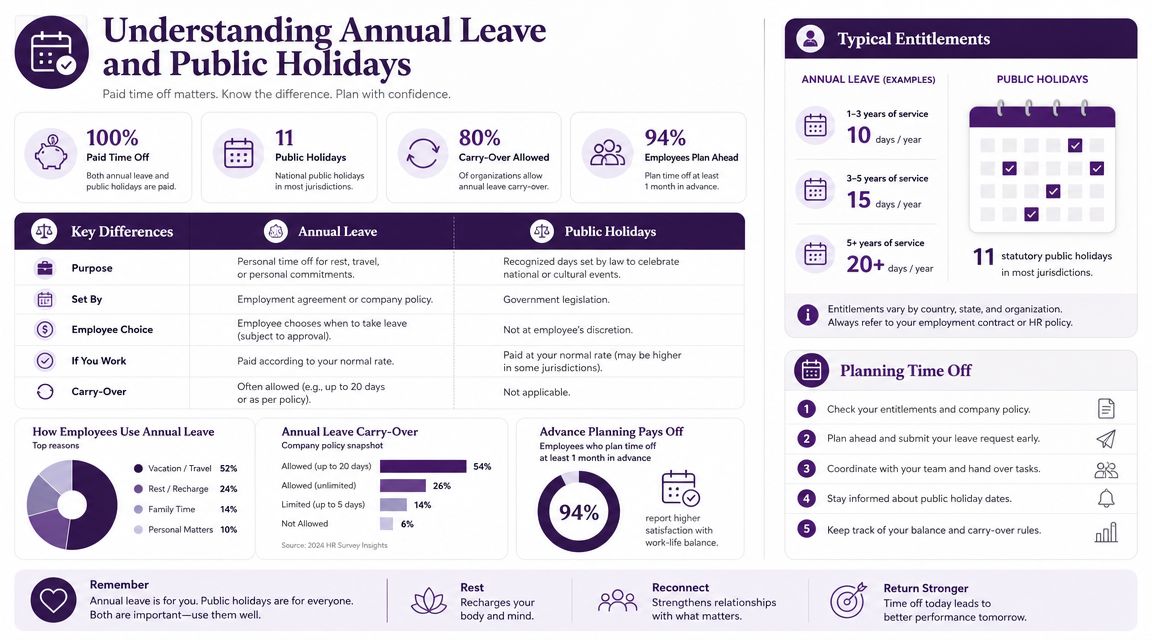
Irish employers often bundle everything into one idea of “holidays”. That's sloppy, and it causes underpayments. In Ireland, there are two separate buckets of time off. One is annual leave. The other is public holiday entitlement. They are not the same thing, and you shouldn't run them through payroll as if they are.
Under the Organisation of Working Time Act 1997, employees in Ireland are entitled to at least 4 working weeks of paid annual leave and 10 public holidays each year, and a full-time worker is typically entitled to 20 paid vacation days plus 10 paid public holidays, according to this Ireland leave entitlements guide.
Treat them as two separate accounts
Think of holiday entitlement as two ledgers.
- Annual leave is the employee's statutory paid leave entitlement built up over the leave year.
- Public holidays are separate statutory days that trigger their own pay rules.
- One doesn't cancel out the other. You can't tell staff that a public holiday is “covered” by their annual leave balance unless your handling of entitlement is legally correct.
Hospitality businesses often encounter issues. A venue is open on a bank holiday, staff work it, and payroll just marks the shift as paid hours. That misses the extra entitlement attached to public holidays. Or a venue closes for a public holiday and management assumes that's merely one less working day. Again, that's not a safe assumption without checking the legal treatment.
Public holiday entitlement is separate from annual leave. Run it separately in your payroll logic, your rota decisions, and your manager training.
What busy operators should do in practice
Don't overcomplicate the principle. Keep it clean:
- Define your leave year clearly in contracts and payroll settings.
- Track annual leave accrual independently from public holiday pay.
- Train managers not to improvise with “time off in lieu” language unless payroll and HR have approved the treatment.
- Check full-time assumptions before applying them to part-time or variable-hours staff.
If your system still treats all paid time off as one generic category, fix that first. It's one of the simplest ways to reduce holiday pay errors in hospitality payroll.
How to Calculate Annual Leave Accrual
This is the part most employers oversimplify.
In Ireland, statutory annual leave isn't calculated with one flat formula for everyone. It must be calculated using the most favourable of three formulas, according to guidance on holidays and holiday pay in the Republic of Ireland. The formulas are:
- 4 working weeks where the employee works at least 1,365 hours in the leave year
- One-third of a working week for each calendar month in which at least 117 hours are worked
- 8% of hours worked, capped at 4 working weeks
If you apply only one method across the board, you're gambling with compliance.
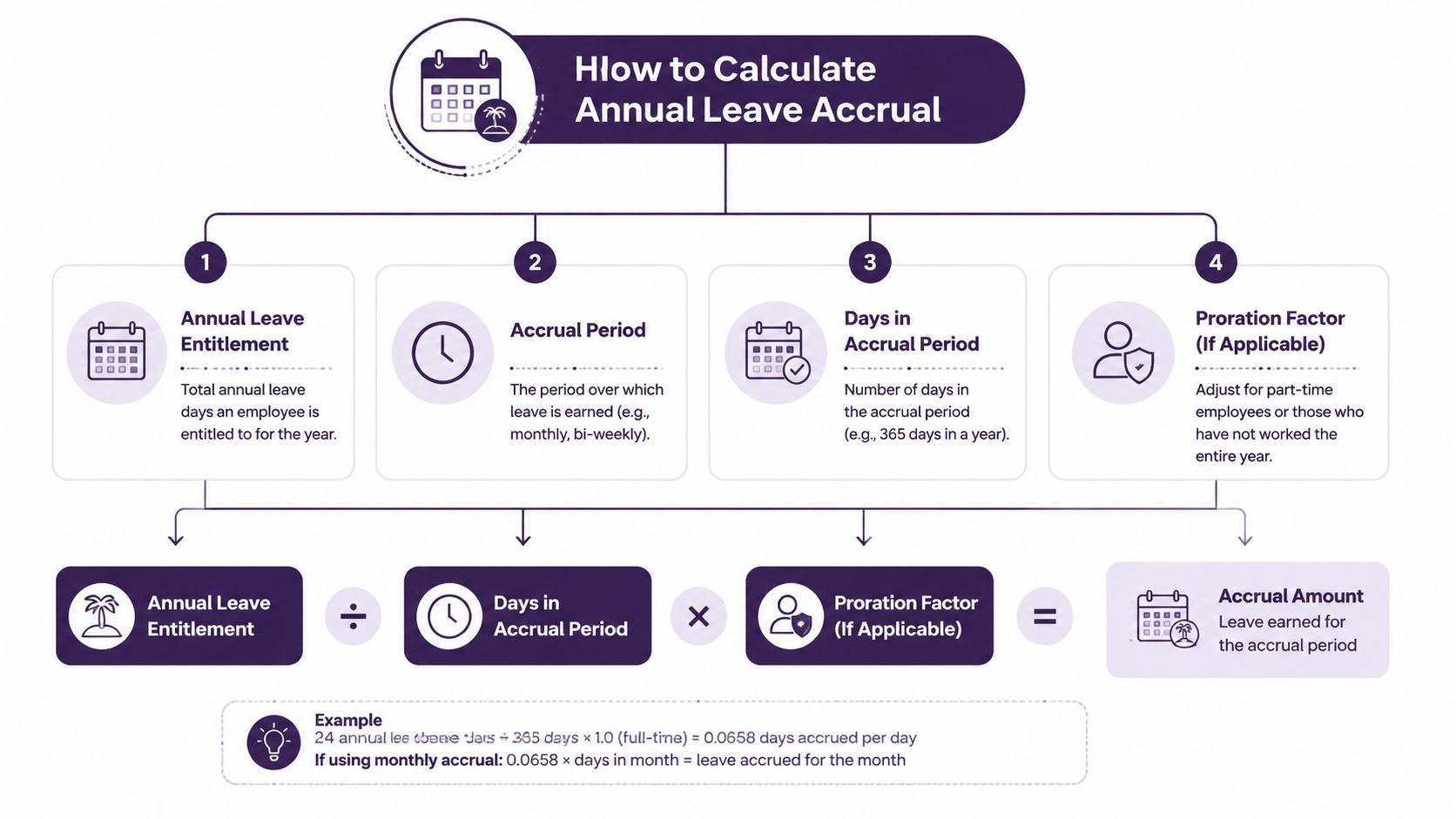
The rule that matters most
Your payroll team should test all three methods where relevant and use the outcome that favours the employee. That is where many hospitality businesses fail. They set one accrual rule for everyone, usually based on hours, and never test whether another statutory method gives a better result.
If you need a practical tool for checking balances, use an annual leave calculator for Ireland, but don't outsource judgment to the tool. The inputs still have to be right.
Method one for high-hours employees
This is usually the cleanest route for full-time staff with stable attendance.
If the employee works at least 1,365 hours in the leave year, they qualify for 4 working weeks of annual leave. For a full-time chef on a regular pattern, this is often the easiest method to apply.
The compliance mistake is assuming this method covers everyone who feels “basically full-time”. It doesn't. You need actual hours and a properly defined leave year.
Method two for monthly threshold workers
This method matters for staff whose hours fluctuate but who still have strong monthly attendance patterns.
If the employee works at least 117 hours in a calendar month, they earn one-third of a working week for that month. Part-time hospitality roles are frequently mishandled under this provision, especially when someone works heavy weekend shifts or compressed hours.
Take a weekend bar supervisor who works long shifts and crosses the monthly threshold in some months but not others. If payroll ignores that threshold and uses a crude yearly estimate, you can understate accrual.
Method three for irregular and seasonal patterns
The 8% of hours worked method is often the one operators reach for first because it seems easy. Sometimes it is the right answer. Sometimes it isn't.
It suits highly irregular patterns better than the other methods, especially for seasonal hotel staff, event crew, or mixed-shift workers whose rosters swing sharply across the year. But it is capped at 4 working weeks, and it still isn't a licence to skip the other tests.
Don't start with the method that's easiest for payroll. Start with the employee's actual pattern, then test the statutory options.
Three hospitality examples without the fluff
- Full-time chef on stable hours: Check whether they meet the annual hours threshold. If they do, the 4-working-weeks method will often be the cleanest answer.
- Part-time café worker with strong monthly hours: Review each month against the 117-hour threshold. This can produce a better result than a lazy hours-based shortcut.
- Seasonal porter with uneven rosters: Use the 8% method as part of the test, but don't assume it wins automatically.
What payroll must also get right
The WRC position, reflected in the guidance linked above, is that leave pay must be given in advance at the employee's normal weekly rate. That point gets ignored constantly in hospitality. Businesses calculate the entitlement eventually, but they don't always pay it properly when leave is taken.
Your process should include:
- Hours capture: Rota system and payroll hours must match.
- Monthly review: Don't wait until year-end to discover an accrual error.
- Normal pay check: Leave pay should reflect the proper weekly rate.
- Advance payment control: Holiday pay shouldn't be left to a later tidy-up.
If your venue still runs annual leave on guesswork and manager memory, change it. This is one of the clearest areas where disciplined payroll beats firefighting.
Correctly Managing Public Holiday Pay
Public holidays are where hospitality operators make avoidable mistakes because the business often stays open when other workplaces shut. Your payroll team can't treat a public holiday as just another busy trading day.
The WRC states that if an employee works on a public holiday, they must be paid their agreed rate for the day, plus an additional benefit. If they are not normally rostered to work, they are entitled to one-fifth of their normal weekly wage extra. The WRC also states that there are 10 public holidays in Ireland, including the public holiday added from 2023 for the first Monday in February, except where 1 February falls on a Friday, in which case that Friday is the holiday, as set out in the WRC guidance on public holidays.
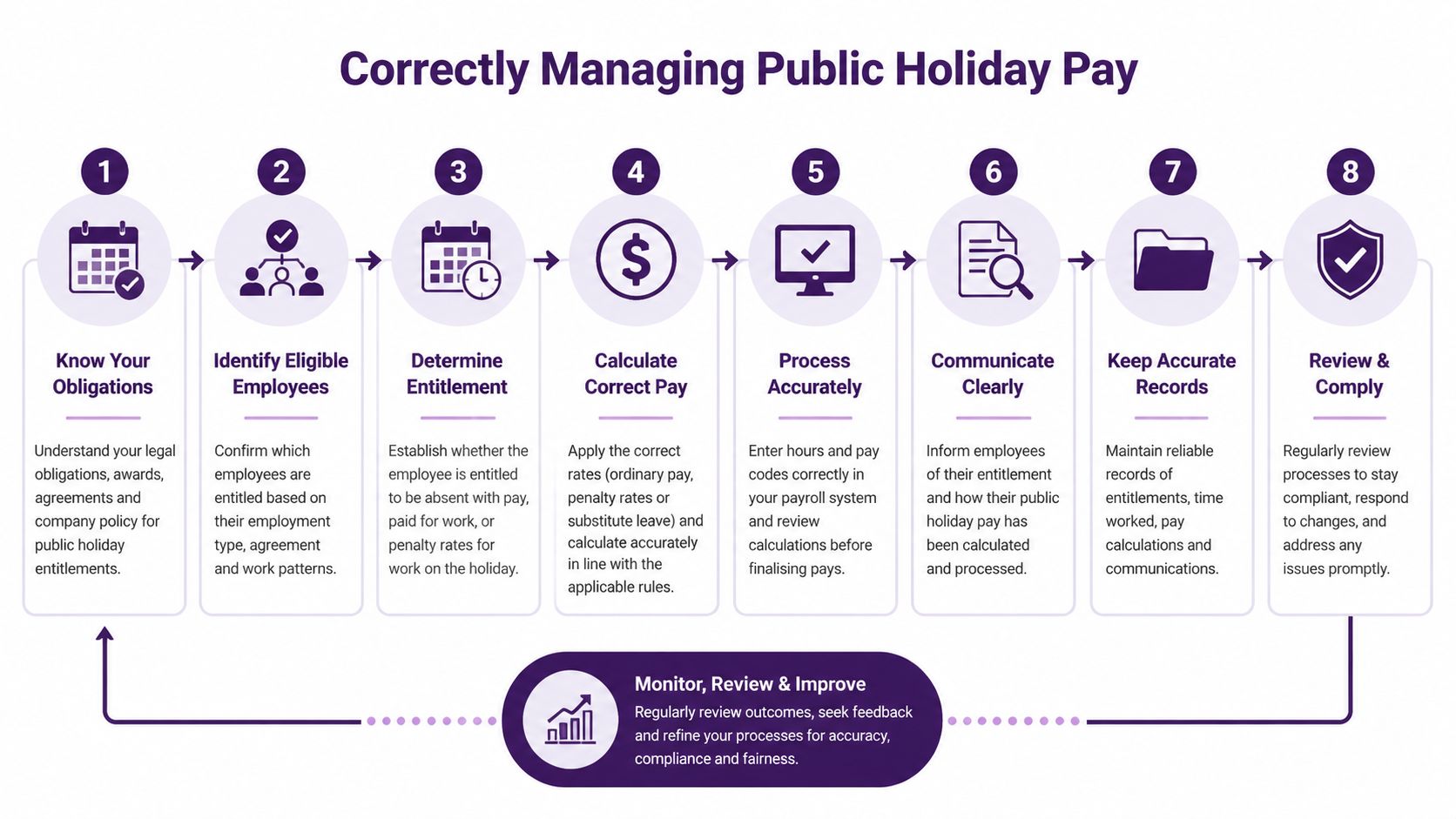
If the employee works the public holiday
A lot of pubs and hotels get this wrong by paying ordinary shift pay and stopping there.
That's not enough. The employee must receive their agreed rate for working the day, and they must also receive an additional benefit. If your managers can't explain what that additional benefit is and how payroll applied it, your process is weak.
If the employee is not normally rostered that day
This catches out operators with part-time and mixed-pattern staff.
If the employee isn't normally rostered to work on the public holiday, they may still have entitlement. The WRC guidance states that in that scenario the employee is entitled to one-fifth of their normal weekly wage extra. That is exactly why hospitality payroll needs normal-week calculations that are grounded in real records, not assumptions.
For practical guidance on handling edge cases, keep a reference point like this public holiday pay knowledge base article available to managers and payroll leads.
Two operational scenarios
Consider these examples:
- A hotel open on St Patrick's Day: Staff who work that day don't just receive ordinary pay. Payroll must apply the agreed rate and the additional benefit correctly.
- A small office attached to a hospitality group that closes on a public holiday: Closure doesn't remove entitlement. The payroll treatment still needs to follow the public holiday rules for the employees affected.
If your rota manager decides public holiday treatment on the fly, payroll will eventually inherit a compliance problem.
The fix is simple. Build one public-holiday decision tree, train managers on it, and stop making exceptions in WhatsApp messages and handwritten rota notes.
Holiday Pay Pitfalls for Hospitality Employers
The worst holiday pay mistakes usually come from habits that feel practical. They save time in the moment and create a bigger mess later.
Rolled-up holiday pay
If you're adding an uplift to an hourly rate and calling it holiday pay, stop. That approach is a compliance red flag.
Holiday pay should be tied to statutory entitlement and paid properly when leave is taken or when lawful payment in lieu arises on termination. Hiding it inside an hourly rate makes it harder to prove entitlement, harder to explain on payslips, and harder to defend if challenged.
Mid-year joiners and leavers
Many venues handle this badly because the leave year is clear in payroll but not in manager practice.
Common mistake: A manager estimates what feels “fair” for someone who joined late or left early.
Compliant approach: Calculate entitlement based on the period worked in the leave year, verify what has been taken, and reconcile the balance before final pay is processed. Don't leave this to payroll alone. HR, operations, and line management all need the same dates and records.
Untaken leave on termination
This is another expensive area because final pays are often rushed.
If a worker leaves with accrued but untaken statutory leave, you need a clean calculation and a documented payment in lieu where required. If your offboarding process doesn't include a holiday balance sign-off, you're asking for disputes after the employee is gone.
Holiday pay in advance
Hospitality businesses often treat holiday pay as something to sort out on the next payroll run. That's poor practice where statutory leave is being taken.
The safer approach is straightforward. When approved leave is due, payroll should know the dates, the entitlement basis, and the pay treatment before the employee goes on leave. Backfilling it later is where mistakes multiply.
Tips and service charges confusion
Operators often mix wage compliance issues into holiday pay administration. Keep your pay categories clean. If you're handling tips, service charges, or gratuities, make sure that process is documented separately and lawfully through payroll and policy controls. A useful operational reference point is this guide to the Payment of Wages Amendment Tips and Gratuities Act 2022.
Clean payroll categories reduce arguments. Messy payroll categories create them.
The standard you should hold
Run every holiday-pay decision through one question: could you explain it clearly with a contract, rota record, leave record, and payslip?
If the answer is no, the process isn't strong enough.
Your WRC-Proof Holiday Pay Checklist
A WRC complaint usually turns on one simple question. Can you show, fast, how you calculated leave and pay for a real employee with real rota patterns?
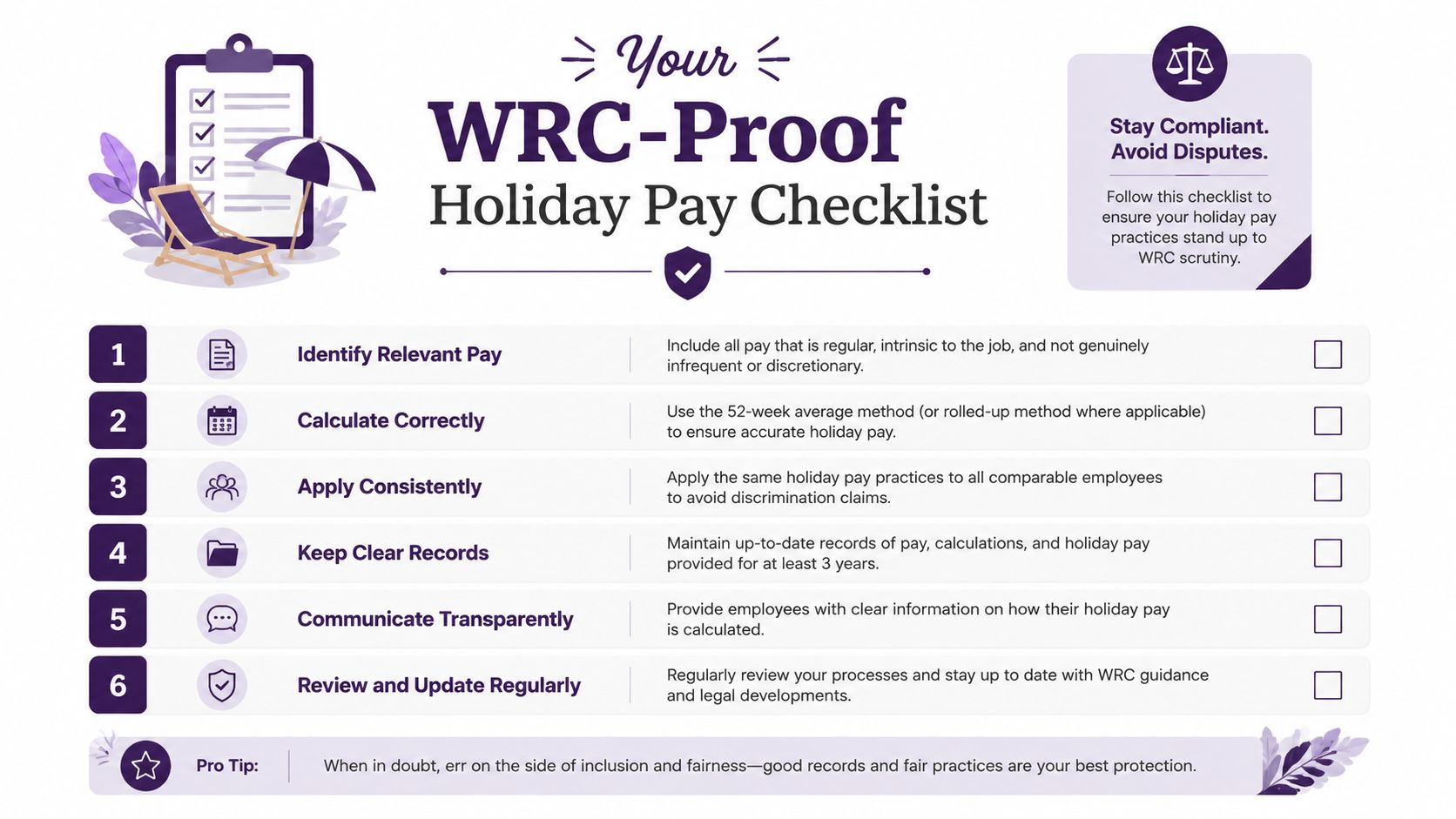
In hospitality, the risk sits in the messy middle. Part-time staff pick up extra shifts. Variable-hours employees move between quiet weeks and peak periods. Managers approve leave informally, then payroll gets incomplete information and guesses the rest. That is how small admin errors become WRC problems.
Use this checklist as an operational test, not a paperwork exercise.
Keep these records without fail
- Actual hours worked: Keep real time and attendance records, not just contracted hours. Annual leave accrual errors for rostered and variable-hours staff often originate in this practice.
- One agreed leave year: Contracts, payroll settings, and HR records must all use the same leave year dates.
- Live leave balances: Track accrued leave, leave taken, approved future leave, and remaining balance in one clear record.
- Public holiday outcomes: Record what applied in each case. Worked, rostered off, paid benefit, or alternative entitlement.
- Calculation support: Keep enough payroll detail to show how holiday pay was worked out, especially where hours and weekly pay vary.
Check the contract language
Your contracts need plain wording on the points that cause disputes:
- How annual leave is accrued and managed
- The leave year dates
- Who approves leave and how requests are recorded
- How public holidays are handled in practice
- What happens to untaken leave on termination
Fix any gap between the contract, handbook, and payroll process. If one document says one thing and managers apply another, your defence is weak before the case even starts.
Audit the workflow, not just the numbers
Year-end checks are too late. Test the workflow during the year, while problems can still be corrected.
Ask your team:
- Are managers logging leave the same way across every department?
- Does payroll get approved leave information before pay is processed?
- Are public holiday decisions applied consistently across sites, outlets, and shifts?
- Can you follow one employee from rota, to accrual, to leave booking, to payslip without filling gaps by guesswork?
If the answer to any of those is no, tighten the process now. A practical option for operators who want outside support is to use a specialist hospitality HR and compliance provider for contract support, people audits, and WRC-focused compliance guidance.
The real test
Pull two files today. One current employee with changing weekly hours. One recent leaver.
Rebuild their holiday position from start to finish using only the contract, rota records, leave records, and payslips. If that takes too long, or different managers give different answers, your system is not complaint-ready. Fix it before an employee does the audit for you through the WRC.
Frequently Asked Questions on Holiday Pay
Can I force staff to take annual leave during a shutdown
You can't handle this casually. If you want staff to take leave at specific times, your contracts, policies, notice process, and operational planning need to support that decision. A Christmas shutdown should never be announced as an afterthought.
What happens to untaken leave when an employee leaves
You should review the employee's accrued statutory leave, subtract what they have already taken, and deal with any lawful payment in lieu through final pay. Don't guess. Final pay disputes often come from rushed exits and incomplete records.
How should I handle holiday pay for variable-hours staff
Use the statutory calculation methods properly and keep detailed records of hours worked, leave accrued, and leave taken. Variable-hours workers are exactly where generic payroll shortcuts fail.
Do tips or service charges automatically count in holiday pay calculations
Don't assume they do and don't assume they don't. This area needs a careful review of how your pay structure is set up, how gratuities are distributed, and how payroll records each element. If your categories are muddled, get advice before you build the wrong approach into payroll.
If holiday pay ireland is causing payroll queries, manager confusion, or compliance risk across your venue, Beacon Recruitment can help you tighten the operational side. They work with hospitality employers on HR documentation, compliance systems, and practical WRC-ready processes so your contracts, rosters, and payroll stop pulling in different directions.
Is Your Holiday Pay WRC-Ready?
Don't let rota confusion and payroll shortcuts turn into costly employment disputes. Book a Free Consultation with Beacon today to build compliant, WRC-proof holiday pay processes for your venue.