July 19, 2026
50/50 Rule Employment Permits Ireland: Guide for 2026
Confused by the 50/50 rule employment permits Ireland? Our 2026 guide helps hospitality owners navigate DETE rules, exemptions, & stay compliant.
You've finally found the chef who can stabilise your kitchen. They've got the right background, they're ready to move, and your team can already see the difference this hire would make to service, consistency, and staff retention. Then the permit process hits a wall.
Not because the person is wrong for the role. Not because the venue can't afford them. Because your workforce mix is wrong on paper.
That's where a lot of hospitality operators in Ireland get blindsided by the 50/50 rule employment permits Ireland issue. It feels obscure until it blocks a necessary hire for your business. In hospitality, that kind of delay isn't academic. It affects rosters, menu execution, room revenue, guest experience, and the sanity of the managers left carrying the gap.
The Hospitality Hiring Hurdle You Did Not See Coming
A typical version of this problem looks like this. A hotel or restaurant has already hired one non-EEA worker successfully. The process was painful, but manageable. So the owner assumes the second application will follow the same path.
It won't, unless the workforce has been structured properly.
That's the trap. Operators often treat permit hiring as a candidate problem. It's rarely just that. It's a headcount planning problem. You can have the perfect Head Chef, Sous Chef, or specialist sommelier lined up and still lose weeks because nobody checked the staff mix before starting the file.
What this looks like on the ground
In hospitality, the issue usually appears when a business is already stretched.
You're short in the kitchen. Local recruitment hasn't delivered. Agency cover is expensive and inconsistent. Existing staff are tired, and standards start slipping in the places that matter most, prep, training, handover, and supervision. Then you identify a strong non-EEA candidate, start moving, and discover that the permit route is blocked by your current workforce ratio.
That frustration is justified. Running a venue is already operationally messy. Immigration rules don't care that you've got weddings booked, functions coming in, or a high season approaching. The rule applies anyway.
The employers who handle this best stop treating permit hiring as a last-minute rescue and start treating it as part of workforce design.
Why hospitality gets caught more than other sectors
Hospitality teams move fast. Staff turnover happens. Part-time hires come and go. Managers often recruit to fix immediate pressure, not to build a ratio that will still work at application stage.
That's why softer HR discipline matters here. If your recruitment process doesn't include culture fit, retention planning, and proper role alignment, your workforce becomes unstable. A useful starting point is thinking about aligning candidates in hospitality HR as part of the wider staffing system, not just the interview stage.
My view is simple. If you run a venue and rely on international hiring, you need to stop seeing the 50/50 rule as legal admin. It's an operational constraint. Once you accept that, you can plan around it properly.
What the 50/50 Rule Actually Requires
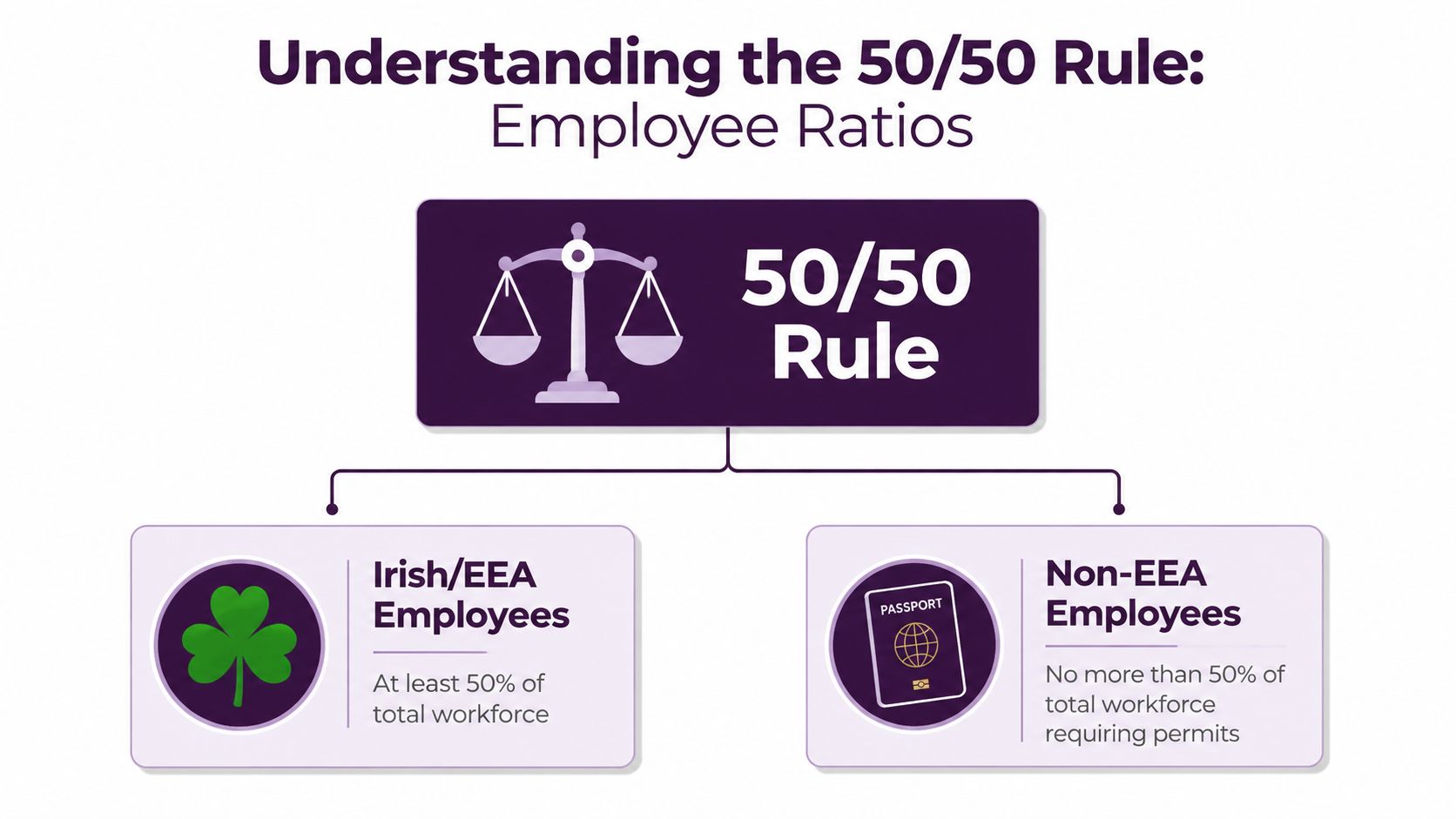
The 50/50 rule is a live headcount test. On the day you submit a General Employment Permit application, at least half of your workforce must be EEA or Swiss nationals. If your venue falls below that line, the application fails, even if the role, salary, and candidate paperwork are all in order.
According to Recruitroo's explanation of Ireland's 50/50 workforce rule, the rule requires that no less than 50% of an employer's total workforce consists of EEA or Swiss nationals at the time of application, and it typically becomes a live issue from the second employment permit application onward.
The rule in plain English
Hospitality operators need to treat this as a workforce planning check, not a form-filling detail.
- First permit application: The ratio may not block you, depending on your existing team.
- Second permit application onward: Your employee mix becomes a direct compliance issue.
- Timing matters: The ratio must be compliant when you submit the application.
- If the ratio is off: The permit does not go through.
If you need the wider process around permit eligibility, salary thresholds, and employer steps, this guide to the General Employment Permit process in Ireland gives the full framework.
A hospitality example that makes it obvious
A venue with 10 staff and 6 non-EEA workers is already out of position for another permit application under this rule. The fix is not better paperwork. The fix is rebalancing the team first by adding enough EEA or Swiss staff to bring the workforce back into compliance.
That point matters because many managers waste time on the wrong problem. They gather candidate documents, discuss start dates, and brief payroll, only to find the application was never viable because the headcount ratio was wrong from the outset.
Practical rule: Before you spend time on permit paperwork, count your active workforce properly and test the ratio as it stands on application day.
What managers should take from this
Your question is simple. Can your current team structure support another permit application right now?
If the answer is no, change the hiring sequence. Recruit locally first where needed, stabilise the ratio, then file the permit application. That is the disciplined way to run hospitality hiring if you want international recruitment to stay available when you need it.
The First Gatekeeper The Labour Market Needs Test
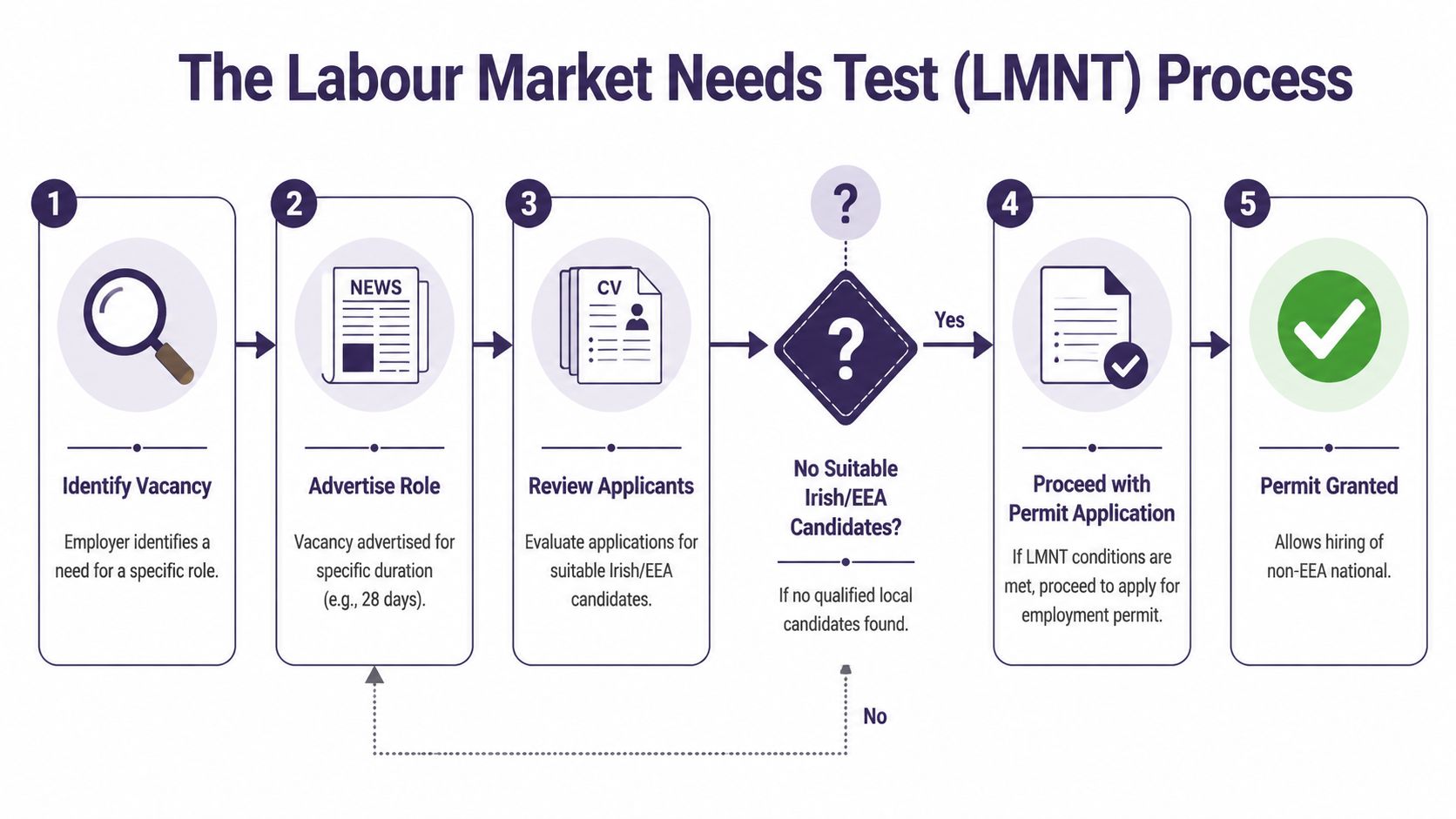
Most hospitality employers fixate on the 50/50 rule and forget the earlier hurdle. That's a mistake. For many General Employment Permit applications, the Labour Market Needs Test, or LMNT, is the first gatekeeper.
Before you apply, you must show that you tried to fill the role from within the available labour market.
According to IAS's guide to the Irish General Employment Permit, employers must complete a mandatory Labour Market Needs Test by advertising the vacancy for at least four weeks through the DSP and EURES, plus three days on a public jobs website. The same source states that the General Employment Permit has a minimum annual salary threshold of €34,000 as of 17 January 2024, and that applications must be submitted within 90 days of the advertisement and at least 12 weeks before the proposed start date.
The sequence matters
Hospitality operators get into trouble when they run this in the wrong order. They identify a strong non-EEA candidate, start preparing documents, and only later realise the ad timeline, salary floor, or submission window wasn't managed correctly.
The sequence should look like this:
- Confirm the role is permit-eligible
- Check the salary level
- Run the LMNT correctly
- Keep the evidence organised
- Submit inside the timing window
- Only then worry about the rest of the permit file
If you're tracking wider permit changes, this summary of Ireland's employment permit occupation list updates in May 2026 helps place the LMNT in the broader permit context.
Where hospitality businesses go wrong
The biggest failure point isn't usually the advert itself. It's the lack of process around it.
- Poor timing: Managers advertise too early, then miss the submission window.
- Weak record-keeping: Screenshots, dates, and ad copies aren't stored properly.
- Salary mismatch: The offered package doesn't line up with the permit threshold.
- Reactive planning: The venue starts the process only when service pressure is already severe.
This is why I push clients to treat the LMNT like a controlled compliance project, not a recruitment afterthought.
If your paperwork is untidy, your timeline is loose, and your staffing need is urgent, the LMNT will expose all three problems at once.
What to do in practice
Build one permit file per role. Keep every advert, posting date, candidate review note, and salary approval in it. Make one person responsible for the timeline. In smaller venues, that might be the owner or GM. In larger groups, it should sit with HR or operations, not drift between departments.
Hospitality businesses are busy by nature. That's exactly why permit work needs structure. If you don't build one, the process becomes chaotic fast.
Strategic Pathways That Bypass the 50/50 Rule
It is Friday afternoon, two chefs are out, bookings are full for the weekend, and the candidate you want needs a permit. If your staffing model is already tight, the 50/50 rule can stop the hire cold. The answer is not panic hiring. The answer is to choose the right permit route before you issue terms.
Some roles sit outside the 50/50 restriction. As noted in Citizens Information's guide to Irish work permits, exemptions can apply to roles on the Critical Skills Occupations List, positions paid above the higher salary threshold, and certain roles supported through Enterprise Ireland or IDA Ireland. For hospitality operators, that changes the conversation from “can we get this person in quickly?” to “how should we structure this hire so it stands up?”

Pathway one through role design
Start with the actual job, not the job title.
If the role fits a Critical Skills route, use that route. Do not relabel a standard vacancy and hope nobody notices. A commis chef does not become a specialist hire because the contract says “culinary innovation lead.” Decision-makers look at duties, seniority, pay, and the actual state of the business.
For hospitality groups, this matters most for senior technical, specialist, or leadership roles. Review the function first. Then build the job description around what the business needs and can defend.
Pathway two through salary strategy
Salary is not just a pay decision. It is a permit decision.
Operators often price a role based on what they paid last year, then discover too late that the figure pushes them into a harder permit route. If the person will run a kitchen, standardise production across sites, lead menu development, train teams, and protect margin, underpaying that hire is usually bad operations and bad permit planning.
A higher package will not suit every venue. But for a key senior hire, paying enough to access a cleaner route can be cheaper than months of agency cover, service inconsistency, management burnout, and repeat recruitment.
Pathway three through enterprise support
Some businesses have another option. If your company structure, investment profile, or growth model puts you in scope for enterprise agency support, check that early and treat it seriously.
This route is more common for larger groups and internationally backed businesses than for single-site operators. Still, if your advisers, founders, or investors have not checked it, ask the question. That includes founders reviewing wider obligations around Irish employment law for non-EEA founders.
What smart operators do before making the offer
The strongest venues do not leave permit strategy to the final stage. They test the hire from three angles at the start.
- Role fit: Does the job support a route outside the standard 50/50 problem?
- Pay fit: Does the salary structure help or block the best permit option?
- Business fit: Does the company have an enterprise connection or corporate profile that changes the route?
- Workforce fit: If no exemption applies, can you fix your staff mix before committing to the application?
Run that check before interviews finish, not after the candidate resigns from another job.
I also advise clients to line up their permit route with their onboarding process. A hire that clears the permit stage but fails basic document checks still creates delays and risk. Use a consistent right to work check process for Irish employers so recruitment, immigration, and payroll are working from the same file.
One good hire can stabilise a venue. One badly planned permit hire can drain management time for months. Structure the role properly, price it properly, and choose the route before urgency starts making decisions for you.
A Practical Compliance Checklist for Your Venue
Most permit problems aren't caused by one big mistake. They come from five or six smaller misses stacked together. A venue doesn't track headcount properly, starts advertising too late, forgets a document, or assumes the same permit route will work again because it worked last time.
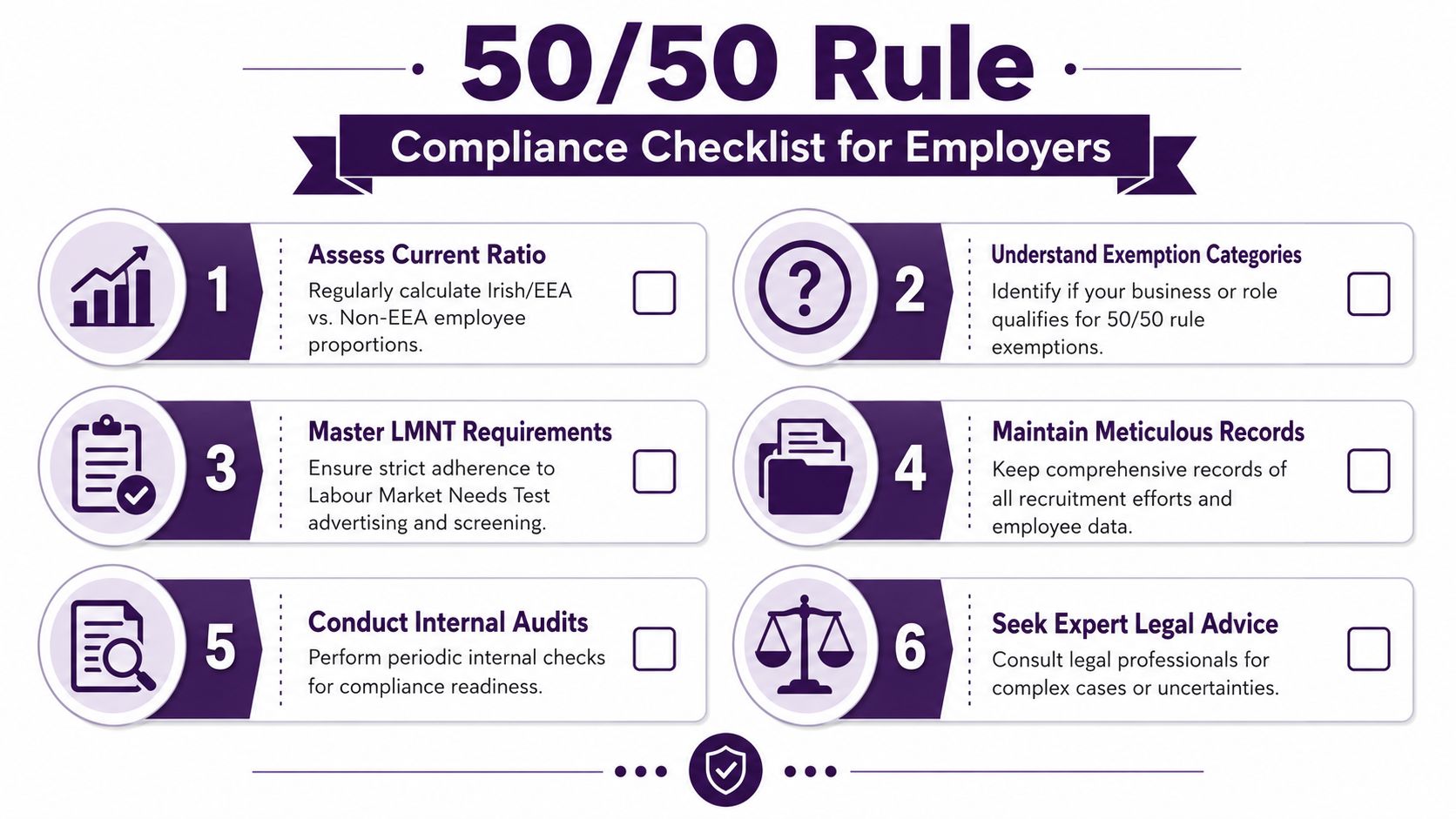
Use this as a working checklist, not theory.
Your venue audit checklist
- Count your workforce before recruitment starts: Don't wait until offer stage. Review your current employee mix before you brief a recruiter or interview a non-EEA candidate.
- Separate staffing need from permit route: A kitchen crisis doesn't automatically make a role suitable for a General Employment Permit. Decide the route first.
- Run one file per vacancy: Keep adverts, CV reviews, job descriptions, contracts, salary approvals, and timeline notes together. Scattered records create avoidable compliance risk.
- Assign one owner internally: One person should control the permit timeline. If three people half-own it, nobody owns it.
- Check salary logic early: If the role might support an exemption pathway, test that before you build the offer around a lower figure.
- Stress-test your staffing plan: Ask what happens if an EEA team member leaves before you submit. If one departure creates a problem, your plan is too fragile.
Document discipline matters more than people admit
The hospitality sector often has decent operational instinct and weak documentation discipline. That's fixable.
Your permit process should sit alongside your right-to-work process, not outside it. If you need to tighten the basics internally, this guide to right to work checks for employers in Ireland is worth reviewing as part of the same compliance system.
For founder-led or newly structured businesses, especially where ownership, payroll, and employment setup overlap with immigration planning, it's also useful to understand the wider context of Irish employment law for non-EEA founders.
The monthly rhythm I recommend
Use a simple monthly review:
- Headcount review: Who is on payroll now?
- Recruitment pipeline check: Which roles may need permits?
- Compliance file review: Are current documents complete?
- Risk review: Has any departure or restructure changed permit viability?
A venue that reviews permit readiness monthly avoids the panic of discovering a ratio problem after the candidate has accepted.
This doesn't need to be complicated. It needs to be consistent.
What to stop doing immediately
Stop assuming last year's permit logic still applies. Stop treating headcount as an accounts issue only. Stop launching an international search before checking whether the business can legally support another application.
Those habits cost time, momentum, and often the candidate.
Building a Resilient Workforce Beyond Permit Rules
The smartest hospitality businesses don't build staffing plans around one urgent permit. They build a workforce model that can absorb change.
That means understanding where permit hiring fits, where local recruitment must support it, and where role design or salary strategy can remove friction before it becomes a compliance problem. The businesses that stay steady usually do three things well. They track workforce composition, they plan hiring in sequence, and they don't wait until the venue is under pressure to make structural staffing decisions.
The rule may change, but planning still wins
There is movement in this area. According to Newland Chase's update on Ireland's employment permit occupation list changes, the Irish Government has announced plans to review the 50:50 rule to address skills and labour shortages, and that review sits within a broader package of 32 changes to occupation lists.
That matters. But don't build your hiring plan around a possible future easing of the rules.
Build around what works now. If the review changes the situation, great. If it doesn't, your venue still needs a staffing model that holds up. That's where broader strategic workforce planning becomes useful. Not as corporate jargon, but as a practical discipline that links hiring, retention, compliance, and service quality.
The right long-term mindset
Treat the 50/50 rule employment permits Ireland issue as one signal, not the whole system.
If your venue repeatedly gets cornered by permit constraints, the deeper problem is usually one of these:
- poor workforce forecasting
- weak local recruitment structure
- lack of retention planning
- under-scoped senior roles
- HR processes that only activate when something goes wrong
Fix those, and permits become easier to manage.
The law may be complex. The response doesn't have to be. Clear records, earlier planning, smarter role design, and disciplined hiring sequences solve more of this than most operators realise.
If your venue needs help navigating permits, workforce compliance, or international hospitality hiring without disrupting day-to-day operations, Beacon Recruitment can help you build a practical plan that works on the floor as well as on paper.
Stop Losing Great Chefs to Visa Problems
Turn immigration delays, 50/50 rule failures, and chaotic onboarding into a clear, reliable hiring pipeline. Let our experts handle the process for you.