August 12, 2026
10 Customer Retention Tactics for Hotels & Restaurants
Discover 10 customer retention tactics for Irish hospitality in 2026 to boost loyalty and repeat business.
The till rings, the reviews look decent, and the dining room or lobby seemed busy all week. Then you check the bookings, and the same names aren't coming back. In Irish hospitality, that's the hard truth, a great first visit doesn't pay the bills unless you turn it into repeat business.
That's why customer retention tactics matter so much right now. Retention is the highest-ROI lever you can pull when margins are tight, because keeping customers is far cheaper than replacing them, and loyal guests spend more over time. Benchmark data shows that increasing retention by 5% can raise profits by 25% to 95%, acquiring a new customer can cost 5 to 25 times more than keeping an existing one, existing customers spend 67% more than new ones, loyal customers are 50% more likely to try new products, and they spend 31% more than first-time buyers, according to Rivo's customer retention statistics. For Irish hotels and restaurants, that's not theory, it's margin protection.
The challenge in Ireland is operational. Hospitality leaders are dealing with staffing pressure, service inconsistency, and rising operating costs, which makes repeat business even more valuable. The Irish Hotels Federation has warned that those cost pressures are weighing on hotel and guesthouse margins, which is exactly why Beacon's consulting pillars, HR, Food Safety, and Business Strategy, matter here. Retention isn't just about marketing campaigns, it's about the systems behind service quality, complaint handling, and the guest experience.
1. Loyalty Programmes and Tiered Rewards
A loyalty programme works when it gives guests a reason to return before they've even left the building. Points, tiers, priority booking, special menus, and experiential rewards turn a one-off visit into an ongoing relationship. In hospitality, the strongest programmes don't just discount, they reward status, recognition, and access.
Tiered rewards are especially effective because they create momentum. Once a guest knows they're close to the next benefit, they're more likely to book again with you instead of trying somewhere else. That's why hotel groups like Hilton Honors and Marriott Bonvoy, and restaurant clubs built around regulars, keep loyalty visible and simple.
Make the programme operational, not decorative
Your programme needs to sit inside your POS and CRM, not in a disconnected spreadsheet. If staff can't see points, tiers, or guest history in real time, the guest experience becomes clumsy and the programme loses credibility.
Practical rule: reward behaviour you want repeated, not just spend. Priority reservations, chef's table access, or invitation-only tastings often drive stronger loyalty than another round of generic discounts.
Build the programme around how people visit your venue. Segment guests by frequency, spend, and occasion, then tailor the rewards. A corporate lunch regular wants different value from a couple who books dinner for anniversaries. Use email and SMS to show tier progress, promote member-only experiences, and keep the programme fresh so it doesn't go stale. Train every host, server, and receptionist to mention it naturally, because if your team doesn't promote the programme, it becomes invisible.
2. Personalisation and Customer Data Analytics
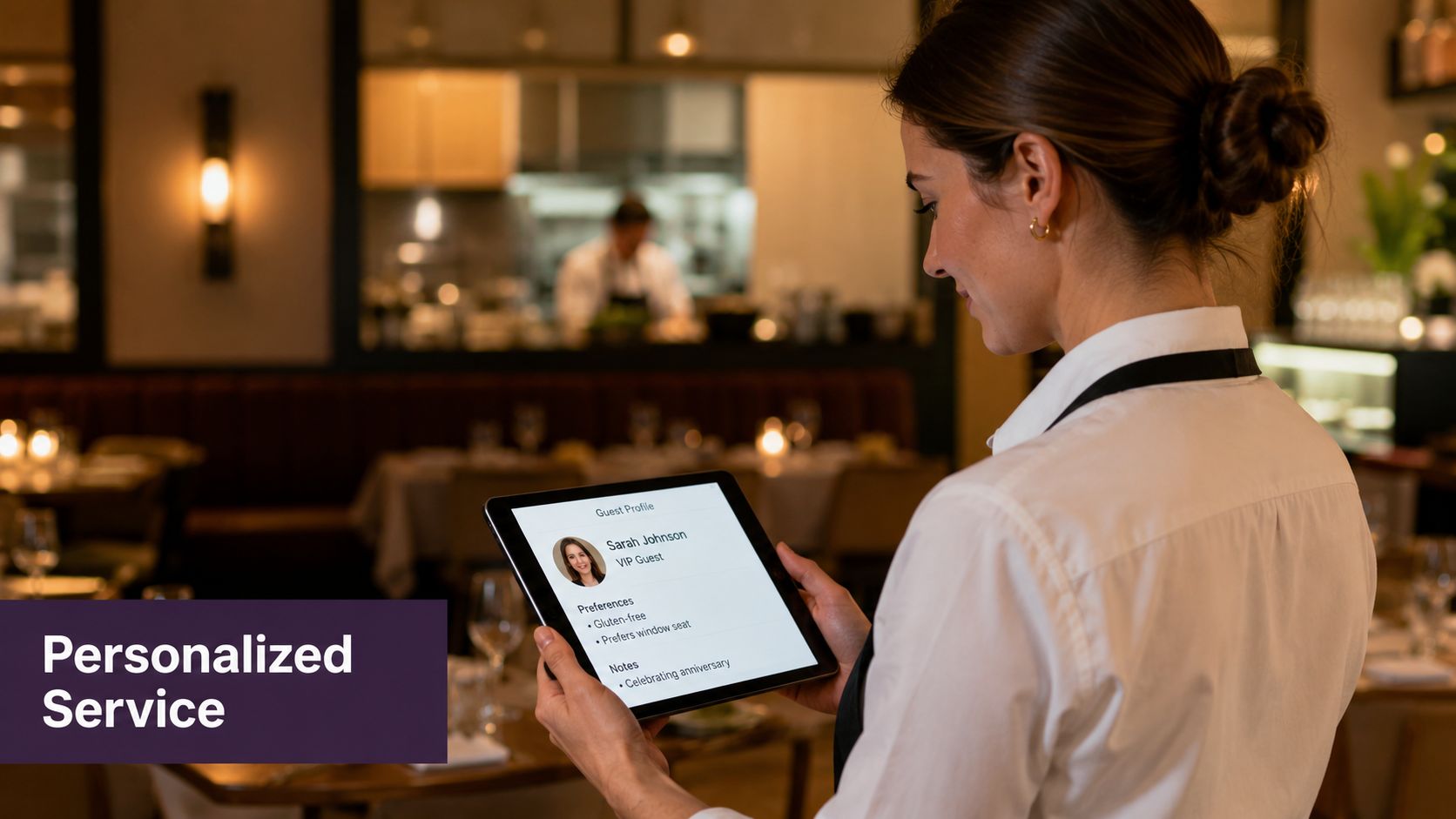
A guest walks back into a restaurant or hotel and expects the team to recognise them. If they have to repeat their table preference, room choice, or dietary needs every time, you have already made the experience harder than it should be. Personalisation works only when it feels helpful, and in Irish hospitality that means using guest data with care, consistency, and discipline.
The strongest operators build a guest profile over time and use it at the point of service. Ritz-Carlton is known for recording guest preferences centrally so future visits feel familiar, and Four Seasons uses arrival data and past interactions to shape the stay. The lesson is straightforward, make the guest feel known without making them work for it.
Start with the data you can actually use
You do not need a complicated analytics setup to start. You need clean records, staff who understand them, and a clear rule for what the business will do with the information.
- Track simple preferences first: window table, quiet section, sparkling or still water, allergy notes.
- Mark milestones carefully: birthdays, anniversaries, first visits, and repeat stays should trigger a genuine acknowledgement.
- Train the full team: the host stand, floor staff, and bar team all need to know how to use guest information appropriately.
- Keep GDPR compliance tight: collect only what you can justify, store it properly, and limit access.
- Audit the data: bad records create bad service, and bad service destroys confidence.
A strong first-party data approach helps here, especially when you are trying to connect website behaviour, booking history, and in-venue preferences, see our first party data guide for more. Beacon's hospitality clients often need this discipline before personalisation can work properly, because sloppy data leads to awkward service and wasted effort. Use analytics to separate your best guests from one-time opportunists, then give those high-value guests a clear reason to return.
If the guest information is scattered across systems, fix that before you promise smarter service. A proper customer service audit shows where the breaks are, whether the problem sits with front-of-house habits, data entry, or the way managers review guest notes. Once those gaps are clear, personalisation becomes operational, not theoretical.
3. Exceptional Service Recovery and Complaint Management
A complaint handled well can save the relationship. A complaint ignored usually ends it. Guests do not expect perfection, but they do expect quick, human action when something goes wrong.
Analysts at Zendesk's customer retention guidance show why this matters. Excellent customer service is widely treated as central to retention, one positive experience can drive recommendations, and repeated good experiences are what offset a bad one. Service recovery is not damage control. It is a retention system, and hospitality operators should run it that way.
Give staff permission to fix the problem
Frontline staff need a clear process and the authority to use it. If they have to chase a manager every time a steak is overcooked or a room is late, the guest is already losing patience.
Set one simple escalation route and stick to it. Log the issue centrally. Follow up within 24 to 48 hours, and make sure the guest hears from someone who can resolve the problem. Then feed the complaint into training, because repeated failures are usually operational, not personal. If you want a useful framework for spotting weak handling patterns, review these negative review mistakes for restaurants and compare them with your own response habits.
Guests remember how you handled the problem more than the problem itself.
Start with the data you can use. Beacon's customer service audits fit neatly here because complaint handling is a service design issue. Review response times, the tone of your team, and how consistently follow-up happens across shifts. If the same complaints keep appearing, the fix belongs in your process, not just your apology. In Irish hospitality, that usually means looking at HR discipline, food safety standards, and the business decisions that shape both.
4. Community Building and Experiential Events
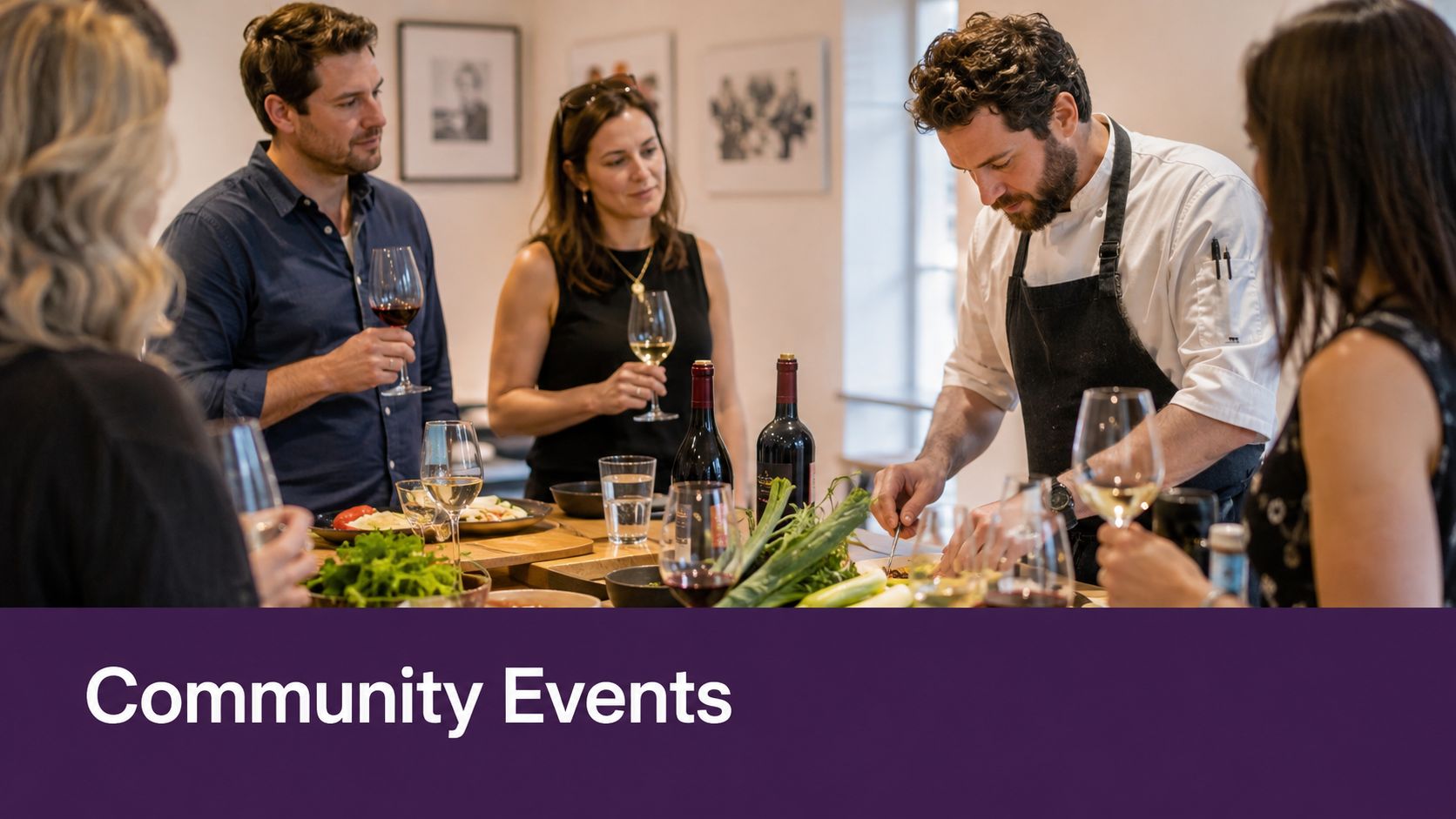
A venue gets repeat business when people feel they belong there. That is the value of community building in hospitality. You are not only selling meals or rooms, you are giving guests a place they want to return to because it feels like theirs.
Look at Ballymaloe Cookery School, where the experience is built around learning and shared interest, or The Dead Rabbit, where themed nights and event culture give guests a reason to come back. People return because the venue stands for something recognisable. Local pubs, boutique hotels, and independent restaurants can do the same at a smaller scale and still make it memorable.
A strong event programme starts with one clear idea.
Pick one signature experience and make it worth repeating. A scattered calendar of random activations drains energy fast. A single well-run format gives your team something they can execute properly, improve over time, and promote with confidence.
- Choose a natural fit: wine nights, chef demos, quiz evenings, tasting menus, or local history talks.
- Use guest feedback: ask regulars what they would attend instead of guessing.
- Create anticipation: a waitlist builds demand and gives people a reason to watch your channels.
- Capture the atmosphere: photos, short clips, and guest quotes let the event continue after the night ends.
- Promote menu priorities: use the event to push dishes, drinks, or packages you want guests to try again.
The best events feel small, specific, and human. A room full of guests who know your staff, recognise each other, and return for the atmosphere is far more durable than a room full of one-time visitors. That kind of emotional attachment is what turns a dining room into a habit.
In Irish hospitality, that only works if the operation can support it. HR shapes whether your team has the confidence and consistency to host well. Food Safety decides whether tasting events, shared plates, and chef-led evenings are run properly every time. Business Strategy decides whether the event earns its place on the calendar or just creates extra work. Beacon's consulting pillars matter here because they turn a good idea into a repeatable one.
5. Personalised Communication and Content Marketing
Your emails and messages should sound like a useful hospitality business, not a promo machine. Guests will read value-first content, especially if it helps them plan better, discover something local, or feel more connected to your venue. The Irish market is already comfortable with email as a retention channel, and 80% of surveyed Irish consumers said they had received promotional emails from brands in the prior 12 months, according to the 2024 Statista survey for Ireland cited by SearchLab.
That means email is still a core post-purchase touchpoint, not a side channel. Use it properly. Fine dining venues can send seasonal menu notes and chef updates. Hotels can send local experience guides. Restaurants can share behind-the-scenes staff stories or operational insights that build trust.
Write for segments, not for everyone
A single blast email is lazy. Segment your list by visit frequency, spend, and guest type, then speak to each group differently.
Use a value-first structure. Put useful information first, promotion second. Keep promotional content to a minority of what you send, and make the unsubscribe option obvious. That respects the guest and protects deliverability.
Open rates matter less than relevance. A couple booking a tasting menu doesn't want the same message as a corporate lunch regular, and a VIP guest shouldn't get the same cadence as a lapsed diner. Use subject line testing, send-time testing, and clear call-to-action links. Then keep what works and cut what doesn't.
For hospitality leaders trying to turn communications into repeat visits, the message is simple. Speak to the guest's last good experience, not just your next sales target.
6. Employee Engagement and Staff Advocacy Programmes
A guest who sees tired, indifferent staff is already halfway out the door. In Irish hospitality, the service culture lives on the floor, at reception, behind the bar, and in the kitchen pass. If the team is stressed, undertrained, or ignored, the guest feels it in the first minute.
Engaged staff remember preferences, fix mistakes faster, and talk well about where they work. Beacon's employee wellbeing in hospitality Ireland work sits at the centre of that problem, because retention starts with the people delivering the experience, not the marketing after it. If your team feels undervalued, your guests will notice.
Build careers, not just rotas
A staff advocacy programme only works if people are proud to recommend their workplace. That takes more than a few social posts. It takes development, recognition, fair scheduling, and a clear path forward.
Start with career pathways that staff can see. Show how an entry-level role can lead to supervisor, manager, or specialist responsibility, and back that up with training. Public recognition matters too, especially when someone handles a difficult complaint well, supports a busy shift, or lifts the people around them.
Use referrals with care. Reward staff when they bring in reliable hires, because good people tend to know good people. Keep feedback visible, not buried in a once-a-year review. Staff need to hear what is going well and what must change, and they need regular one-to-ones so managers can spot burnout, ambition, and training gaps before they turn into turnover.
Beacon's HR and compliance pillar matters here, because clear contracts, clean handbooks, and consistent people processes reduce chaos on the floor. Good guest retention depends on a stable team inside the business, and stable teams come from managers who know how to lead, not just schedule.
7. Strategic Partnership and Cross-Promotion
Strong retention doesn't always mean owning every touchpoint yourself. Sometimes it means surrounding the guest with complementary value. Hotels, restaurants, local attractions, spas, golf clubs, and tourism operators can all create a better reason to return when they work together properly.
A hotel package that links dining, a local spa, and a nearby activity is more memorable than a room rate alone. A restaurant that partners with a wine distributor or a local producer creates a stronger story around the meal. The guest sees more value, and the business gets more reasons to stay in touch.
Keep the partnership mutual
A bad partnership is just borrowed noise. A good one gives both businesses a clear commercial reason to keep promoting each other.
Practical rule: if the partner can't explain the value to their own customer base in one sentence, the deal isn't ready.
Start with three to five complementary businesses that already serve your guests. Agree the terms in writing. Decide who does what, how referrals are tracked, and what success looks like. Co-brand your materials so the guest understands why the offer matters, then review performance regularly and cut weak partnerships fast.
For Irish operators, this can be especially effective in destination-led areas where the guest is already planning a wider experience. Cross-promotion keeps your venue relevant after the first visit and increases the odds of a return trip.
8. Proactive Win-Back Campaigns for Lapsed Customers
Don't accept churn. If a guest used to visit and no longer does, you've already got data worth using. Lapsed customers are warmer than cold prospects because they already know your brand, your product, and your location.
The right win-back message does two things. It reminds them why they came in the first place, and it acknowledges what may have changed. Maybe the menu shifted, the service slipped, the price point moved, or the customer's needs changed. Find out before you send a generic offer.
Work the list by value and timing
Prioritise high-value lapsed customers first. Then segment by recency, spend history, and likely reason for leaving.
Use specific campaign angles, not broad discounts. A guest who loved a Sunday lunch experience needs a different prompt from a corporate booker who hasn't returned since a staffing issue. If you know the reason, address it directly. If you don't, ask in a short follow-up before you pitch the return.
The strongest response often comes from relevance, not generosity. Seasonal offers, anniversary reminders, and new-menu launches can all work if they're tied to the guest's past behaviour. Once they respond, follow up quickly while the momentum is still there.
Win-back campaigns also expose operational weaknesses. If the same reasons keep appearing, that's a management problem, not a marketing one. Fix the service, the timing, or the offer, then re-run the campaign with a cleaner experience behind it.
9. Feedback Systems and Continuous Improvement Culture
A guest leaves a comment about slow breakfast service, a mismatched order, or a front-desk handover that felt sloppy. If the team never changes what happens next, that guest learns the venue is listening without acting. Feedback only improves retention when it leads to visible operational change.
Organisations with strong feedback cultures report 30-50% higher retention rates, according to the source linked in how to measure customer satisfaction. That matches what experienced operators see on the floor. Guests stop repeating the same complaint when the business fixes the underlying issue, and staff stop treating feedback as noise when management closes the loop.
Close the loop every time
Short surveys after the visit, quick review replies, and clear follow-up with the team all matter. The point is not to collect comments for a dashboard. The point is to change how the venue runs.
- Keep surveys brief: three to five focused questions is enough.
- Ask about the actual visit: ask about the meal, the room, the welcome, or the specific interaction rather than vague satisfaction.
- Respond to public reviews: do it within 24 to 48 hours where possible.
- Show the fix: tell guests when their comments led to a visible improvement.
- Use the feedback in training: staff need to see how guest comments change behaviour on shift.
The strongest feedback systems are disciplined, not defensive. They work because the guest sees a pattern, the team sees a pattern, and management acts on both. For Irish hospitality operators, that means using Beacon's HR, Food Safety, and Business Strategy pillars to turn complaints into training, standards, and better decisions at the service level.
10. Subscription and Membership Models
Subscriptions change the psychology of repeat visits. Once a guest pays upfront for access, they're more likely to come back to justify the spend. That's a powerful retention lever for cafés, wine clubs, hotel memberships, and dining passes.
The model works best when the benefits are easy to understand and useful. If a member can't quickly see the value, the programme becomes a cancellation risk instead of a retention tool. That's why the strongest hospitality subscriptions are simple, visible, and easy to use.
Build value that people will use
Offer multiple tiers if your customer base is broad. A casual guest and a high-frequency regular should not be forced into the same model. Make the first month low-friction if possible, then build trust with straightforward terms and a clean cancellation process.
Track subscriber value against acquisition cost. If the economics don't work, don't pretend the model is strategic. Keep the benefits fresh, promote them consistently, and make sure the member experience feels better than the standard one.
Subscription thinking also shifts your team's mindset. Instead of asking how to close a single sale, you start asking how to create repeated use. That's the right question for hospitality venues that need more predictable revenue and stronger guest loyalty.
10-Point Comparison of Customer Retention Tactics
1. Loyalty Programmes and Tiered Rewards
- Implementation complexity: Medium–High; requires systems and multi-site integration.
- Resource requirements: POS/CRM integration, app or cards, ongoing marketing budget and a rewards fund.
- Expected outcomes: 20–30% increase in repeat visits, higher customer lifetime value and richer customer data.
- Ideal use cases: Hotel chains, multi-site restaurants and businesses with high-frequency customers.
- Key advantages: Encourages repeat visits, improves data capture and enables targeted upselling.
2. Personalisation and Customer Data Analytics
- Implementation complexity: High; requires data infrastructure, modelling and privacy compliance.
- Resource requirements: CRM, analytics tools, staff training and compliance/legal support.
- Expected outcomes: Higher customer satisfaction, better churn prediction and more personalised offers.
- Ideal use cases: Luxury hotels, fine-dining restaurants and venues with high-value guests.
- Key advantages: Predictive insights, tailored experiences and greater operational efficiency.
3. Exceptional Service Recovery and Complaint Management
- Implementation complexity: Medium; requires clear policies, training and escalation workflows.
- Resource requirements: Staff empowerment, training budgets and a compensation or resolution fund.
- Expected outcomes: Can recover up to ~95% of complainants and strengthen customer loyalty.
- Ideal use cases: High-touch venues and operations where service quality can vary.
- Key advantages: Turns service failures into loyalty opportunities, reduces churn and builds trust.
4. Community Building and Experiential Events
- Implementation complexity: Medium; requires event curation, scheduling and partnerships.
- Resource requirements: Event staff, venue space, marketing and partner coordination.
- Expected outcomes: Stronger emotional connections, more repeat visits and organic social-media content.
- Ideal use cases: Independent restaurants, boutique hotels and culinary venues.
- Key advantages: Creates differentiation, encourages advocacy and increases social-media exposure.
5. Personalised Communication and Content Marketing
- Implementation complexity: Medium; requires segmentation, a content calendar and ongoing testing.
- Resource requirements: Email/SMS platforms, content creators and CRM integration.
- Expected outcomes: Improved engagement, potentially higher ROI than paid advertising and sustained brand awareness.
- Ideal use cases: Venues serving different customer segments or running regular promotions and seasonal offers.
- Key advantages: Relatively low-cost engagement, stronger trust and measurable performance.
6. Employee Engagement and Staff Advocacy Programmes
- Implementation complexity: Medium; requires culture initiatives, HR processes and incentives.
- Resource requirements: Training, recognition budgets, leadership time and referral rewards.
- Expected outcomes: Better service quality, lower employee turnover and more authentic referrals.
- Ideal use cases: Staff-intensive hospitality businesses and venues struggling with employee retention.
- Key advantages: Creates authentic brand ambassadors, improves service consistency and supports recruitment.
7. Strategic Partnerships and Cross-Promotion
- Implementation complexity: Low–Medium; requires partner selection and agreement management.
- Resource requirements: Business-development time, co-marketing resources and some legal or contractual support.
- Expected outcomes: Expanded reach, shared customer-acquisition costs and more distinctive packages.
- Ideal use cases: Tourism ecosystems and businesses with complementary local partners.
- Key advantages: Provides access to partner audiences, enables co-marketing and expands the customer offering.
8. Proactive Win-Back Campaigns for Lapsed Customers
- Implementation complexity: Medium; requires churn analysis and segmented outreach.
- Resource requirements: Data analytics, CRM tools, a targeted-offer budget and follow-up resources.
- Expected outcomes: Potential recovery of ~10–30% of lapsed customers, alongside better insight into why customers leave.
- Ideal use cases: Businesses with trackable customer histories or subscription models.
- Key advantages: Often more cost-effective than acquiring new customers and can deliver strong ROI.
9. Feedback Systems and a Continuous Improvement Culture
- Implementation complexity: Low–Medium; requires survey workflows and processes for acting on feedback.
- Resource requirements: Survey or review tools, staff analysis time and change-management resources.
- Expected outcomes: Earlier identification of issues, improved retention and ongoing operational improvements.
- Ideal use cases: Any hospitality business aiming to improve service consistency.
- Key advantages: Produces actionable insights, increases accountability and strengthens customer trust.
10. Subscription and Membership Models
- Implementation complexity: High; requires pricing strategy, fulfilment processes and billing systems.
- Resource requirements: Subscription software, consistent service delivery, marketing and financial planning.
- Expected outcomes: More predictable recurring revenue, increased visit frequency and higher customer lifetime value.
- Ideal use cases: Clubs, hospitality memberships and businesses offering repeatable ongoing value.
- Key advantages: Improves revenue predictability, strengthens customer retention and creates ongoing opportunities for upselling.
From Tactics to Transformation Your Operational Blueprint
The strongest retention programmes don't live in marketing alone. They sit inside the way you hire, train, recover service failures, manage feedback, and design every guest touchpoint. That's why the best customer retention tactics in hospitality are operational, not cosmetic.
If you want repeat visits, start with service consistency. If you want loyalty, build systems that let staff recognise guests, fix problems quickly, and communicate with purpose. If you want durable margins, align those systems with compliance, food safety, and management discipline. As Pebb's operations management insights make clear, operational method is what turns intent into repeatable performance.
Beacon Recruitment is built for that reality. Its consulting work across HR, Food Safety, and Business Strategy fits directly into the retention problems Irish hospitality operators are dealing with every day. When the team is stable, the processes are clean, and the guest experience is measured properly, retention stops being a hope and becomes a system.
If you're ready to turn repeat business into a disciplined operational advantage, talk to Beacon Recruitment. They help hospitality teams tighten the systems behind service, compliance, and margin protection, which is exactly what retention depends on. Visit Beacon Recruitment to see how their consulting and operational support can help your venue keep more guests coming back.
Turn First-Time Guests Into Loyal Regulars
Empower your venue with structured service recovery, engaged staff, and reliable operational systems that drive repeat revenue.