July 16, 2026
Boost Staff Retention: Irish Hospitality Strategies
Struggling with staff retention in Irish hospitality? Our guide reveals why staff leave & offers operational strategies to build a stable team in 2026.
Another strong staff member has handed in notice. You're back on the rota at midnight, covering gaps, calming the team, and telling yourself this is just hospitality. It isn't. High turnover isn't a personality trait of the industry. It's what happens when daily operations keep pushing decent people out faster than you can stabilise them.
I've seen this across hotels, restaurants, bars, and multi-site groups. Owners blame the labour market. Managers blame pay. HR blames recruitment. Meanwhile the actual causes stay in the building: chaotic rosters, weak onboarding, inconsistent supervision, and managers who are stretched so thin they spend more time firefighting than leading.
If you want better staff retention, stop treating it like a morale campaign. Treat it like an operating system. Good venues don't keep staff because they talk nicely about culture. They keep staff because the job is organised, fair, and professionally managed on the floor.
The Revolving Door in Irish Hospitality
You hire someone good. They settle in, customers like them, the team trusts them, and then they leave just when they're becoming properly useful. That's the cycle that wears operators down. It doesn't just create vacancies. It drags service quality, forces rushed hiring, and keeps managers trapped in permanent recovery mode.
This is bigger than one venue having a rough patch. BambooHR's 2025 turnover benchmarking data reported that travel and hospitality had the highest average turnover at 2.8% over a measured six-month period, compared with 1.8% in education and 1.4% in government. That matters because too many hospitality operators still benchmark themselves against their own messy history instead of sector reality.
Turnover is an operations issue
If your kitchen, floor, reception, or housekeeping teams are constantly changing, every core process gets weaker:
- Service gets less consistent because experienced staff aren't around long enough to set standards.
- Managers lose productive hours to interviews, training, shift swaps, and damage control.
- Team trust erodes because reliable people get loaded with extra work every time someone leaves.
- Guests notice when confidence, pace, and communication drop.
That isn't an HR side issue. That's the engine room of the business.
The dangerous excuse operators make
A lot of venues shrug and say turnover is just part of hospitality. That excuse is expensive. Yes, the sector is tougher than many others. The benchmark proves that. But accepting churn as normal is how poor systems survive for years.
Practical rule: If people keep leaving the same roles, under the same managers, after the same kind of shift patterns, you don't have a recruitment problem. You have a repeatable operational failure.
The venues that get retention under control usually do a few unfashionable things well. They onboard properly. They plan rotas like adults. They hold supervisors accountable. They stop pretending that “we're like a family” can compensate for unpredictability and stress.
Staff retention improves when the job becomes more stable, not when the staff become more tolerant.
Why Your Best People Really Leave
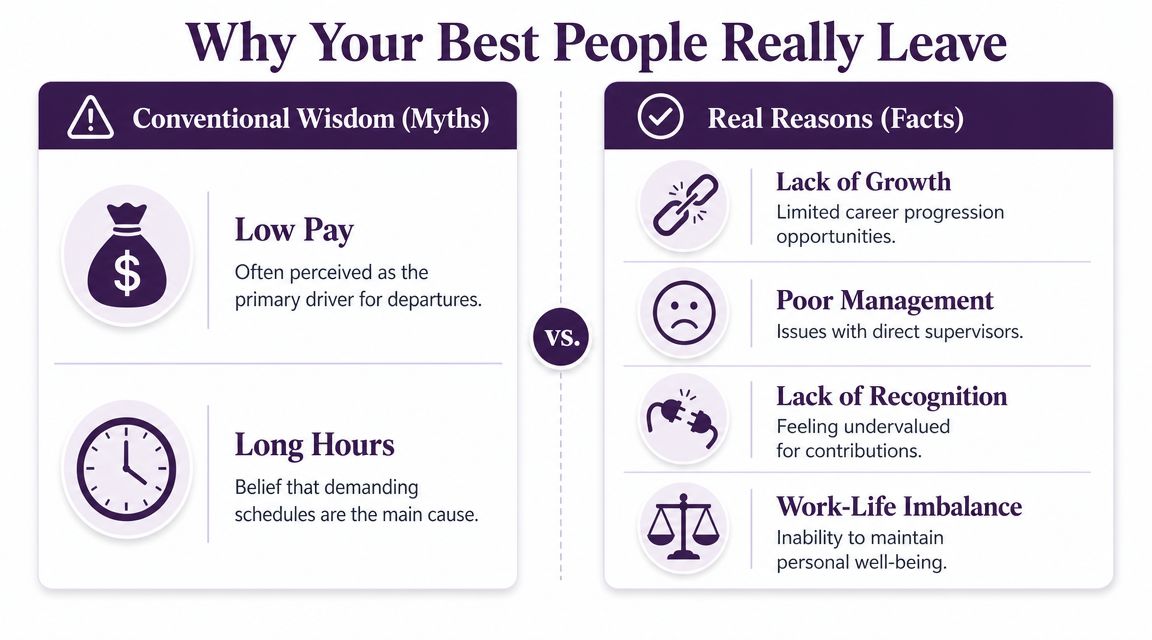
The lazy answer is pay. Pay matters, of course. But in hospitality, operators often use money as a convenient explanation because it lets them ignore the way the place is run.
The stronger explanation is operational strain. Gallup's 2025 employee retention and attraction indicator found that 68% of employees who left jobs did so for reasons tied to “Engagement and Culture” or “Wellbeing and Work-Life Balance.” For Irish hospitality, that lands hard because the sector depends on shift work, unsocial hours, and constant customer-facing pressure.
What that looks like on the floor
People rarely leave because of one dramatic incident. They leave because the job keeps taking more than it gives back.
A decent supervisor becomes impossible to work with after weeks of short staffing. A fair rota turns erratic. Days off stop feeling protected. Requests get ignored. Recognition disappears. The person still likes the team, but they no longer trust the job.
That's why your best staff are often the first to go. They know what a well-run operation looks like, and they have enough confidence to leave a poor one.
The real drivers behind resignations
In Irish hospitality, these are the issues that repeatedly trigger exits:
- Unpredictable scheduling that wrecks sleep, childcare, college, or any life outside work.
- Manager behaviour that feels inconsistent, reactive, or unfair.
- Weak recognition where reliable staff get more responsibility but not more support.
- No visible progression so competent people feel stuck in the same loop.
- Chronic pressure with no recovery built into the operation.
People can tolerate a hard job. They won't tolerate a hard job that feels disorganised and indifferent.
Stop listening only to exit interview clichés
By the time someone resigns, they usually simplify the reason. They'll say they got a better offer, need a change, or want more money. Sometimes that's true. Often it's a cleaner version of the actual story.
Usually, the story is this: the rota kept changing, the manager was poor, the pressure never eased, and the venue gave them no good reason to keep absorbing it.
If you want stronger staff retention, don't ask only why people left. Ask what daily frustrations made leaving feel sensible.
Calculating the True Cost of High Turnover
Most operators only count the visible cost. Agency fees. job ads. uniform replacement. maybe a recruiter. That's the shallow end of the pool.
The cost sits in the hours your business burns every time a role opens up. A vacancy means someone else covers. A manager rewrites the rota. A senior team member trains the new hire while trying to run service. Standards dip because nobody has enough headspace to coach properly. Then the guest experience gets shakier, which puts more pressure back on the team.
Where the cost actually shows up
Think of turnover like a leak in a busy kitchen. You can keep refilling the bucket, but you're still losing water all day. Hiring alone won't fix that.
The operational costs usually hit in five places:
- Management time spent screening, interviewing, checking references, and patching gaps.
- Vacancy drag while the role is open and everyone else absorbs extra workload.
- Training waste when experienced staff repeatedly teach basics instead of improving standards.
- Quality loss because newer team members are slower, less confident, and more error-prone.
- Morale damage when dependable people feel they're carrying the venue for others.
The customer pays for your churn first
Owners often ask where turnover shows up in the P&L. It shows up in customer experience before it shows up anywhere else. Slower check-ins. weaker upselling. missed details. flat atmosphere. more complaints handled badly. Hospitality is a memory business, and unstable teams create forgettable service.
That's why staff retention isn't soft. It protects consistency. Consistency protects revenue.
Why constant hiring is a false fix
Recruitment matters, and if you need support with urgent roles, hospitality hiring support can help fill operational gaps. But hiring into broken systems only restarts the same cycle with a new name on the schedule.
Owner test: If every new starter struggles with the same shift pattern, the same handover confusion, and the same manager, the employee is not the pattern. The operation is.
Good operators stop asking, “How do we replace people faster?” and start asking, “What keeps making this role unpleasant to stay in?” That question usually leads straight to rotas, supervision, communication, and training.
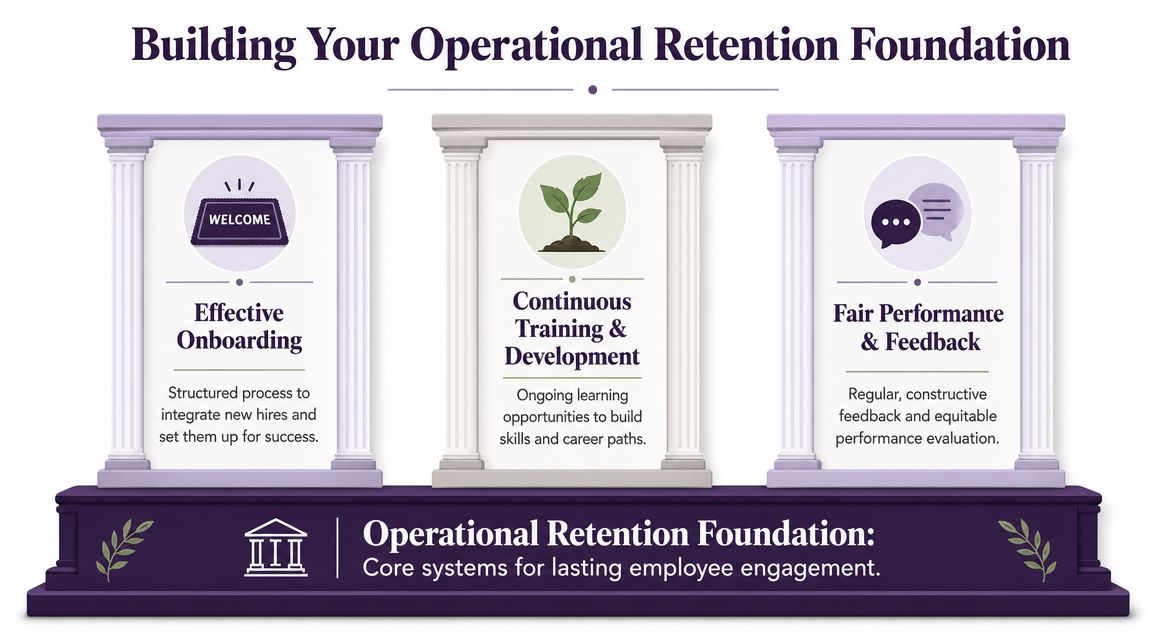
Building Your Operational Retention Foundation
Monday morning in a busy Irish venue. A new hire arrives for their third shift, the rota has changed twice since Friday, nobody is sure who is training them, and the supervisor is already dealing with a no-show. By the end of the week, that employee is questioning the job. By the end of the month, they are gone.
That is not a culture problem. It is an operating problem.
If your venue feels unstable, start with the parts of the job people experience every day. Strong retention comes from systems people can rely on. In hospitality, the three that matter most are onboarding, scheduling, and communication.
Build a real first 90 days
Track retention in stages, not as one headline figure. Early exits usually point to poor induction, unclear standards, or chaotic rotas. Later exits usually come from different problems. If you lump them together, you miss the fix.
The first 90 days deserve their own process. During this time, staff decide whether your venue is organised, fair, and worth committing to.
A usable onboarding system should include:
- Day one clarity on uniform, reporting line, break rules, shift expectations, and who to go to when service gets messy.
- Assigned training with a capable team member who knows the role and can explain standards properly.
- Written operating standards for service sequence, cash handling, opening and closing duties, and what needs manager approval.
- Set check-ins in the first days and weeks, so small frustrations get dealt with before they become resignations.
- A simple review point at 30, 60, and 90 days so managers can spot whether the issue is fit, training, or roster pressure.
If onboarding in your venue means paperwork, a quick walkaround, and hoping the team fills the gaps, you are building churn into the job.
Fix the rota before you fix morale
Owners regularly underestimate how much turnover starts with the schedule. Staff can handle pressure. They cannot build a life around late rota releases, random clopens, changed days off, and the sense that reliable people get punished with the worst shifts.
A good rota does four things well:
- Gives notice early enough for people to plan childcare, study, transport, and a life outside work.
- Spreads difficult shifts fairly instead of loading them onto the same dependable names.
- Explains hours allocation clearly so the process feels consistent rather than personal.
- Cuts last-minute changes to genuine exceptions, not poor planning.
This matters in Ireland because many hospitality teams are balancing college timetables, shared housing, family commitments, and long commutes. If your schedule creates weekly stress outside work, retention drops inside work.
Make communication routine, not heroic
Communication in a good venue should feel boring. That is a compliment.
Problems start when every manager gives different instructions, WhatsApp becomes the operating manual, and staff only hear feedback when something goes wrong. That setup creates confusion, resentment, and avoidable mistakes.
Set a few habits and enforce them:
- Pre-shift briefs that cover bookings, pressure points, upsell focus, and any service risks.
- Weekly manager reviews on staffing gaps, training needs, absence patterns, and upcoming pinch points.
- One agreed channel for updates so staff are not chasing screenshots or mixed messages.
- Written standards and policies that stay the same regardless of who is running the shift.
If you need help turning that into clear policies, contracts, handbooks, and practical management processes, HR consulting for hospitality operators can help put the structure in place. The point is simple. Retention improves when the job feels organised. People stay longer when the operation stops making everyday work harder than it needs to be.
Why Your Managers Are Your Best Retention Tool
Most venues obsess over hiring frontline staff and ignore the people who shape whether those staff stay. That's backwards. Your supervisors, duty managers, heads of department, and assistant managers control the daily experience of the job.
If they're inconsistent, burnt out, poorly trained, or constantly firefighting, your retention plan is already compromised.

Weak managers create exit cascades
One of the biggest blind spots in hospitality retention is manager churn. Guidance on strategic retention planning makes the point clearly: replacing a good supervisor is far harder than replacing a single shift worker, and weak line management amplifies absenteeism, poor scheduling, and exit cascades.
That's exactly what happens in real venues. One shaky manager starts making avoidable errors. Rotas become reactive. Standards become selective. Conflict sits unresolved. Strong staff get frustrated. Then more people leave, which makes the manager worse under pressure.
What managers must be able to do
A title is not enough. If you want managers to retain people, train them to do the job behind the job.
They need to handle:
- Rota fairness without favourites, panic scheduling, or punishing dependable staff.
- Feedback that is direct, calm, and timely instead of public, vague, or delayed.
- Conflict resolution before tension poisons a shift or a whole team.
- Recognition so reliable performance is noticed, not taken advantage of.
- Escalation when staffing pressure, compliance issues, or burnout risk need senior support.
A manager who can run service but can't manage people will still cost you good staff.
Support your supervisors like they matter
Many owners promote the strongest operator on the floor and then leave them exposed. No training. No boundaries. No coaching. Just more responsibility and more blame. That's how you lose promising managers.
Protect them with structure:
- Give authority that matches responsibility. Don't expect ownership without decision rights.
- Review their teams, not just their sales. A manager's retention pattern tells you a lot.
- Coach them regularly. Don't wait until complaints stack up.
- Reduce avoidable admin pressure. Good managers should spend time leading, not just patching payroll and shift chaos.
If you're hiring for this level, restaurant manager recruitment in Ireland should focus on people leadership and operational discipline, not just years served or venue prestige. Too many businesses hire charismatic survivors when they need stable team builders.
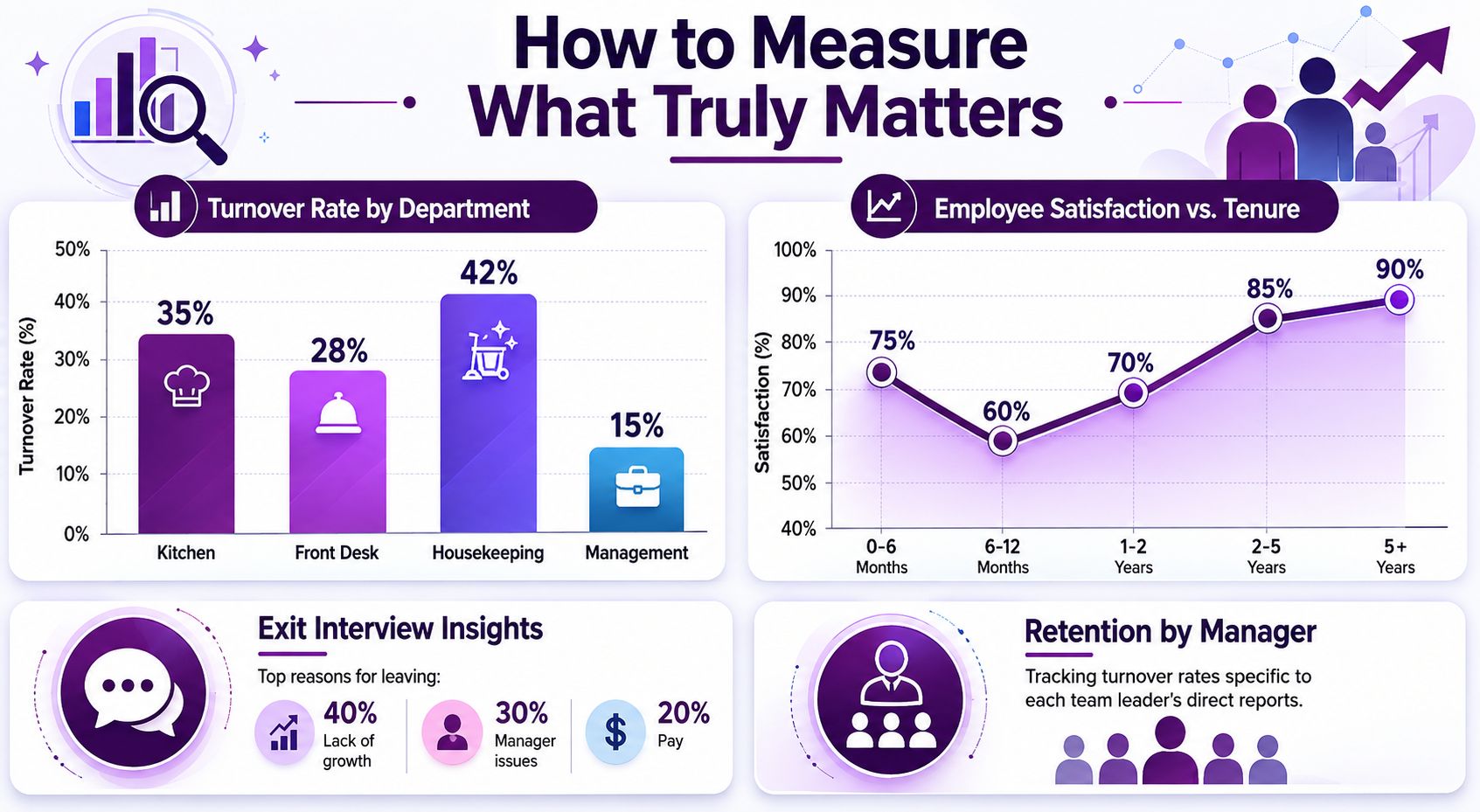
How to Measure What Truly Matters
You finish the month thinking turnover looks manageable. Then you look closer. Three new starters quit before they learned the menu, one solid supervisor is interviewing elsewhere, and the same two reliable staff covered every messy rota gap. Your headline number missed the actual problem.
Measure retention the way you run service. Break it down to the points where the operation fails.
Start with tenure bands. Track leavers in 0 to 90 days, 3 to 12 months, and 12+ months. Those groups usually point to different faults in the system, and they need different fixes.
Read the signal behind each tenure group
Lumping every resignation into one bucket hides cause and effect. Segment it properly and patterns show up fast.
- 0 to 90 days usually means the handoff into the job is failing. The role was sold badly, training was patchy, standards were unclear, or the first few rotas were chaotic.
- 3 to 12 months usually points to day-to-day management problems. Staff can handle hard work. They stop tolerating unfair shifts, poor communication, constant short staffing, and managers who make every week harder than it needs to be.
- 12+ months usually signals drift. Good people see no path, carry too much of the operation, or get stuck as the dependable ones who are always asked to absorb the pressure.
Each group has a different owner. Early exits sit with hiring, onboarding, and rota design. Mid-tenure churn sits with line management. Longer-tenure losses usually sit with workload, progression, and whether the business keeps leaning on the same people until they burn out.
Add manager and role views
Tenure on its own is not enough. Split retention by role, department, site, manager, and contract type.
That is how you find the leak.
A kitchen team with stable leadership will behave differently from a front office team dealing with constant shift swaps. Weekend bar staff on variable hours will leave for different reasons than full-time accommodation assistants. One manager may keep people for years. Another may create a resignation pattern that repeats every quarter.
Track questions like these:
- Which managers lose new starters fastest?
- Which departments have the highest churn after month three?
- Which roles generate the most rota complaints or last-minute cover requests?
- Which contract types create the most friction around hours and fairness?
If your reporting cannot answer those questions, it is too vague to help you.
Track leading indicators, not just exits
Resignations are the final symptom. You need earlier warning signs.
Watch for repeated late rota changes, unfilled shifts, training sign-offs that drag on, probation reviews that never happen, and the same names appearing on extra cover week after week. None of that sits neatly inside a basic turnover report, but all of it predicts churn.
For Irish hospitality operators, this is the difference between reacting and controlling the floor. By the time someone hands in notice, the operational failure has usually been visible for weeks.
Start doing stay interviews
Exit interviews have limited value. The employee has already decided the job is no longer worth the hassle. Stay interviews give you a chance to fix the work before that decision hardens.
Keep them short. Keep them specific. Ask:
- What part of this job is wearing you down at the moment?
- What usually makes a week here go well, and what throws it off?
- Does your rota feel fair and predictable?
- What does your manager do that helps you stay, and what pushes you toward leaving?
- Do you see a realistic next step here, or do you feel stuck?
Ask your steady performers these questions first. They will usually give you the clearest read on what the operation gets right and where it keeps making life harder than it should be.
Good measurement is not a bigger dashboard. It is a short list of patterns you can act on this week.
Your Staff Retention Action Plan
Irish hospitality is operating under structural pressure. CSO-based analysis summarised here notes that accommodation and food service in Ireland has one of the highest turnover environments and wages materially below the national average. That means you can't rely on market conditions to solve retention for you. You have to run the operation in a way that gives people a reason to stay.
So keep this simple. Don't launch ten initiatives. Fix the work.
Do this now
- Audit your last resignations for common patterns in rota design, supervision, and first-month experience.
- Review the next four weeks of scheduling for fairness, predictability, and how often managers are making late changes.
- Pick your pressure roles and check whether training and handovers are written down.
- Talk to your strongest staff this week before they become your next leavers.
Do this next
- Build a proper 90-day onboarding plan with named trainers, check-ins, and clear standards.
- Train line managers on feedback, conflict handling, and fair allocation of shifts.
- Separate retention reporting by tenure band, manager, and department.
- Introduce stay interviews as a normal management tool, not a rescue tactic.
Keep doing this
- Treat rota quality as a leadership metric.
- Hold managers accountable for team stability, not just service delivery.
- Create visible progression paths even if promotion options are limited.
- Fix repeat friction points fast so staff can see the venue responds.
The hard truth is simple. Staff retention in hospitality isn't won with posters, pizza nights, or vague talk about culture. It's won in the rota, in the induction, in the shift brief, and in the quality of the person leading service. Get those right and people stay longer. Get them wrong and you'll keep paying for the same problem in different uniforms.
If your venue needs help turning staff retention into a workable operating system, Beacon Recruitment supports Irish hospitality businesses with recruitment, HR and compliance support, and operational consulting that tackles the causes of churn on the floor, not just the symptoms.
Is High Turnover Costing Your Venue?
Don’t accept staff churn as an unavoidable cost of doing business. Book a Free Consultation with Beacon today to audit your operations and stop the revolving door.