July 16, 2026
Your Restaurant Compliance Checklist Ireland for 2026
Get your restaurant compliance checklist Ireland for 2026. Navigate Irish food safety, HR, insurance & risk assessment with our complete guide. Stay compliant!
You're trying to run service, manage wages, sort suppliers, cover a sick chef, answer customer complaints, and keep cash moving. Then compliance starts tapping you on the shoulder. A missing record here. An out-of-date document there. A training gap nobody noticed until the wrong person asks the question.
That's why a proper restaurant compliance checklist in Ireland can't just be a kitchen cleaning sheet pinned to the wall. If your only system is “keep the place tidy and hope for the best”, you're exposed in ways that don't show up until an inspection, a staff issue, an insurance claim, or a dispute lands on your desk.
Most owners already know food safety matters. The bigger operational mistake is treating every other compliance issue as separate admin. It isn't. The kitchen, the rota, the payroll file, the incident log, the training record, and the insurance schedule all connect. When one area is weak, the others usually aren't far behind.
Your Restaurant Compliance Obligations Go Beyond the Kitchen
A lot of restaurant owners think compliance means bleach, temperature probes, and making sure the fridges are clean. That's part of it. It's not the whole job.
A typical week proves the point. You onboard a new server. Someone swaps shifts at short notice. A customer asks about allergens. A delivery arrives without the paperwork you expected. A staff member questions holiday pay. A contractor services the extraction unit. None of that feels like “compliance” in the moment. All of it is.
If you only think about inspections when you hear “Environmental Health”, you'll miss the back-office risks that can hurt just as badly. Employment records, written terms, payroll evidence, incident reporting, and insurance cover often sit in different folders, managed by different people, with no one checking whether they align.
What catches owners out
The stress usually doesn't come from one dramatic failure. It comes from accumulation.
- Food safety drift: A HACCP file exists, but nobody has updated it for menu changes.
- HR gaps: Hours are worked, but records are inconsistent or hard to produce.
- Insurance assumptions: You believe you're covered until a claim exposes an exclusion or missing detail.
- Operational silos: The kitchen manager, general manager, accountant, and owner all hold pieces of the puzzle, but nobody sees the whole picture.
Compliance works best when you treat it as an operating system, not a last-minute tidy-up.
A resilient restaurant usually stands on three practical foundations. First, food safety and hygiene. Second, employment law and people records. Third, legal and financial protection around how the business trades. If one pillar is weak, service becomes harder, risk goes up, and every inspection feels more stressful than it should.
The owners who cope best aren't necessarily the most paperwork-driven. They're the ones who build simple routines that survive a busy Friday night.
The Three Pillars of Irish Restaurant Compliance
A lot of restaurant owners focus on the kitchen first. Fair enough. Food safety is the most visible pressure point. But a real restaurant compliance checklist Ireland needs to cover three connected areas, because the risk rarely stays in one lane.

Food safety and hygiene
This pillar gets the most attention, and for good reason. It covers premises standards, food handling, storage, cleaning schedules, allergen controls, traceability, and the management system that holds the whole process together.
Owners often assume a clean kitchen equals compliance. Inspectors do not assess it solely on that. They look at how the premises are maintained, how food is handled in practice, and whether your food safety system is current, understood, and followed by the team. If your HACCP file still reflects last year's menu or nobody can explain the controls during service, the paperwork will not save you. If you need to tighten that foundation, start with a clear guide to what a HACCP plan should cover for an Irish food business.
The practical point is straightforward. A cleaning checklist on its own is too weak. Your system needs to match how the business trades on a busy day.
Employment law and workplace records
Many hospitality businesses are thinner than they realise in this area. HR compliance gets pushed into the background until there is a WRC complaint, a request for records, or a dispute with a staff member who has kept better notes than the employer.
For restaurants, this pillar sits in daily operations, not in a drawer marked admin. Rotas, breaks, clock-ins, payslips, public holiday treatment, contracts, and manager decisions all feed into the same risk. The restaurant can be serving well and still be exposed if records are patchy or terms are unclear.
As noted in this Irish employment compliance guide, employers can run into trouble over working time records, pay documentation, holiday entitlements, and written terms of employment. Those issues are common in restaurants because shift patterns change, supervisors make informal adjustments, and nobody checks whether the records still support the reality on the floor.
Operational truth: A WRC issue usually starts with an everyday shortcut that felt harmless at the time.
Business and liability protection
The third pillar is broader than many owners expect. It includes insurance cover, incident reporting, fire safety checks, equipment servicing, contractor oversight, and the records you need if a claim, dispute, or investigation lands on your desk.
The reason this pillar is important is that a restaurant does far more than prepare meals. You employ people, welcome the public, handle deliveries, use gas and electrical equipment, store alcohol and stock, process payments, and rely on third parties. Each of those activities creates a separate exposure. Insurance may respond to some of them, but only if the policy fits the business you operate and your records back up what happened.
This is also where the three pillars meet. A staff injury can become an insurance matter. A customer allergen incident can become a food safety issue and a liability issue. A poor rota record can become an employment dispute and weaken your defence. Good operators do not manage these as separate binders owned by different people. They build one working system that joins them up.
Mastering Food Safety and Hygiene Regulations
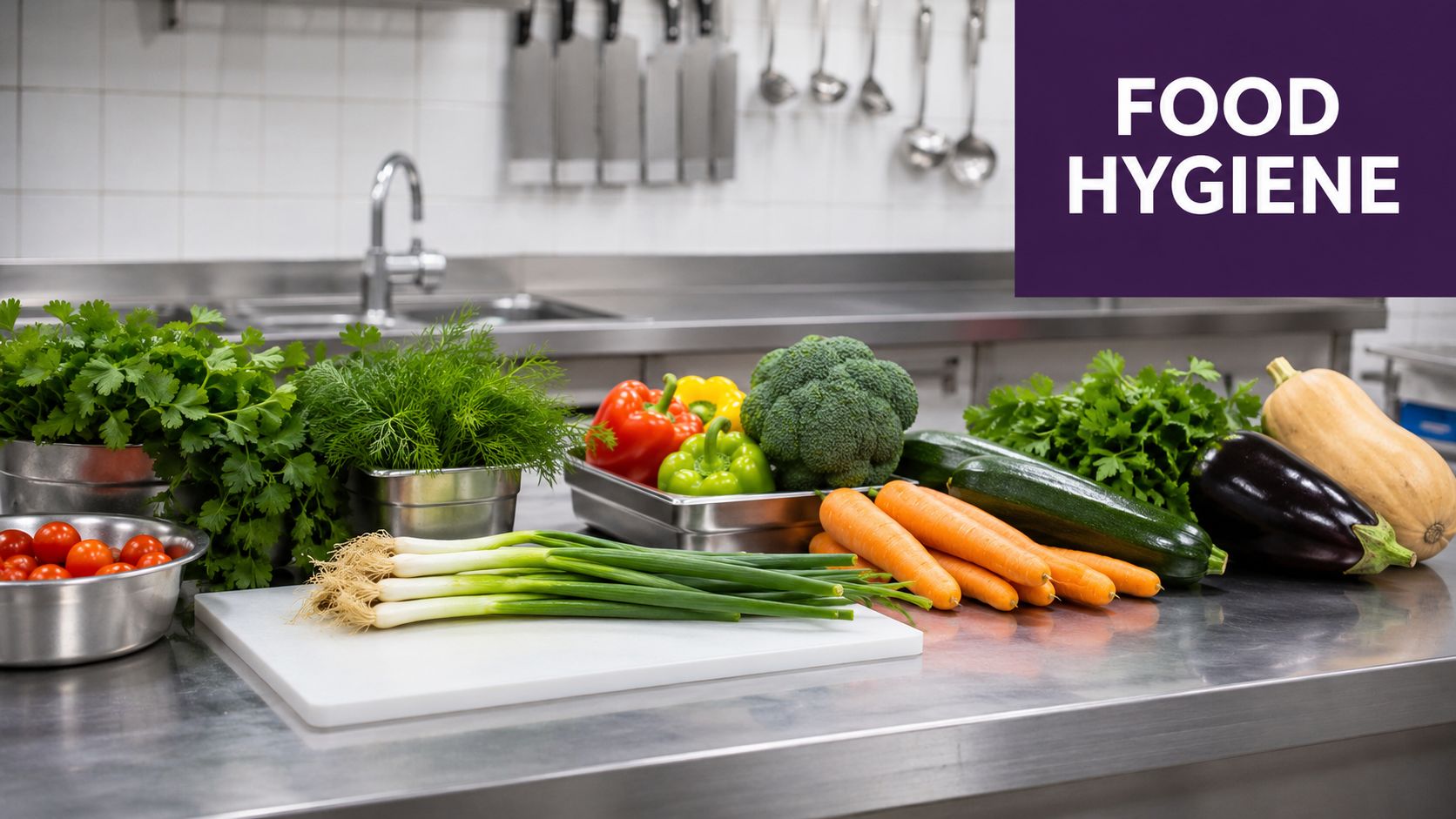
Food safety is where many owners feel the most pressure, but it's also where the false sense of security creeps in. A tidy kitchen isn't enough. Inspectors don't just look for a clean floor. They look for evidence that your systems work when nobody is watching.
Start before opening, not after
For a new restaurant, the first hard gate isn't your first customer. It's registration.
In Ireland, statutory food business registration should be completed at least 28 days before opening, and that registration triggers regulatory visibility for the Environment Health Service and sets up the business to be inspectable under HACCP-based controls, as explained in Beacon's guide to opening a café or restaurant in Ireland.
Miss that timing and everything gets compressed. Equipment checks, supplier specs, allergen controls, staff training, and HACCP paperwork all end up being rushed. That's when corners get cut, usually by accident.
Think like the person walking through the door
A practical inspection-ready routine should answer five questions fast.
- Can you show your system? Your HACCP plan should match your actual menu, process flow, and equipment. If you need a refresher, what a HACCP plan is and why every Irish food business needs one is worth reviewing before you start rewriting paperwork.
- Can your team explain what they do? Training records matter, but staff understanding matters more. If a junior team member can't explain basic hygiene or allergen steps, your paper file won't save you.
- Can you prove controls are happening? Temperature checks, delivery checks, cleaning verification, and corrective actions need to be current and believable.
- Can you trace ingredients and allergens? Supplier information, labels, menu updates, and allergen matrices need to line up.
- Can you show that management reviews problems? Repeated gaps with no follow-up suggest the system is cosmetic.
If your logs are perfect but your staff behaviour says otherwise, the problem isn't paperwork. The problem is management control.
What works and what doesn't
What works is a short, disciplined set of routines used every day.
- Daily verification: Someone signs off the opening, service, and close-down controls.
- Live allergen management: Menu changes trigger an immediate update to specs and customer-facing information.
- Usable records: Logs stay on site, organised, and easy to retrieve.
- Manager spot-checks: A supervisor tests whether procedures are being followed.
What doesn't work is the “inspection week” approach.
- Deep cleaning without system checks: Clean stainless steel won't fix a weak process.
- Generic HACCP folders: If the document doesn't reflect your operation, it creates risk instead of reducing it.
- Training by assumption: “She worked in another place before” isn't evidence.
- Backfilling records: If records are recreated after the fact, they tend to fall apart under questions.
The standard you want is simple. Your restaurant should be ready on an ordinary Wednesday, not just when somebody panics.
Navigating Employment Law and WRC Compliance
A failed food safety inspection gets attention quickly because owners can see the kitchen. WRC exposure is quieter. That's why it catches people off guard.
The danger isn't just one complaint. It's the pattern underneath it. Unclear contracts, weak working-time records, missing pay documentation, inconsistent holiday tracking, and ad hoc disciplinary handling usually show up together. When they do, the business looks disorganised even if service is strong.
Why this area gets neglected
Hospitality runs on movement. People swap shifts, stay late, clock out wrongly, cover each other, and pick up extra hours at short notice. That flexibility keeps service alive, but it also creates recordkeeping risk if managers rely on memory, WhatsApp messages, or handwritten notes that nobody reconciles properly.
That's the blind spot highlighted in Irish guidance on restaurant employment compliance. Food hygiene gets the attention, while labour-law compliance is under-explained even though the inspection remit is broad and operators can face penalties for failures around records and pay evidence.
The records that matter most
If I'm reviewing risk in a restaurant office, I'm not looking for polished policy documents first. I'm looking for basic control.
- Written terms of employment: Can you produce them quickly, and do they match the role the person is doing?
- Working-time records: Are hours and breaks captured accurately, stored consistently, and available if requested?
- Pay documentation: Do wages, hours, and deductions line up cleanly?
- Leave records: Can you explain holiday balances and absences without guesswork?
- Management notes: If there has been a conduct or performance issue, is there a fair and documented process behind the decision?
A useful starting point is understanding how the Workplace Relations Commission operates in practice, then checking whether your internal records would stand up to that level of scrutiny.
A rota is not a compliance record. It's a plan. You still need evidence of what actually happened.
What owners should change first
Don't try to solve this with a giant HR manual nobody reads. Tighten the basics.
First, make one person accountable for employment records, even if several managers contribute to them. Shared responsibility usually becomes no responsibility.
Second, standardise how hours, breaks, leave, and changes are recorded. If one manager uses an app, another uses a notebook, and a third relies on text messages, you've already lost control.
Third, train managers on the cost of casual promises. Off-the-cuff statements about shifts, pay, notice, tips, or holidays can create problems later if the formal records say something else.
Restaurants often think WRC compliance is separate from operations. It isn't. It sits inside scheduling, onboarding, supervision, payroll handover, and how managers speak to staff on busy days. That's why it needs to be built into the same checklist as food safety, not left in a drawer.
Essential Insurance for Protecting Your Business
Insurance feels abstract right up to the moment it becomes urgent. Then the fine print matters more than the premium. For restaurant owners, the point isn't to buy every possible policy. It's to understand which risks can threaten the business and whether your cover matches those exposures.

The policies most restaurants need to understand
Some covers are easy to dismiss because nothing has happened yet. That's a mistake.
- Public liability insurance: This is about third-party injury or property damage. A customer slips near the entrance, a chair collapses, or a visitor is injured on site. The issue isn't just the incident. It's whether the business can evidence maintenance, cleaning checks, and incident reporting.
- Employers' liability insurance: This deals with employee injury or illness arising from work. In a restaurant that can involve kitchen slips, lifting injuries, cuts, burns, or other workplace accidents. If training and safety routines are weak, the claim gets harder to defend.
- Product liability insurance: This is the cover owners often assume sits inside food safety generally. If a customer alleges illness or harm from what you served, you need to know how the policy responds and what records the insurer will expect.
- Property insurance: Premises, equipment, contents, and stock all matter because a restaurant without functioning kit can't trade properly.
The cover people regret not checking
Business interruption is the one many operators misunderstand. It isn't just about a dramatic closure. It's about whether the policy supports the business if an insured event stops trading or disrupts it badly enough to hit income.
Cyber exposure also deserves a place in a modern compliance discussion. Restaurants now rely on card payments, online bookings, delivery integrations, staff data, and cloud-based systems. If access fails or data is compromised, the operational disruption can be immediate even before any legal issue emerges.
Insurance should be reviewed against how your venue actually trades now, not how it traded when the policy was first arranged.
What to ask before renewal
A renewal meeting should be practical, not passive.
- Have we changed the business model? New opening hours, takeaway growth, events, or refurbished areas can all affect risk.
- Have we changed staffing profile? Different roles, agency workers, or international hires can alter operational exposure and documentation needs.
- Have we added equipment or systems? New kitchen kit, payment tools, booking systems, or third-party integrations should be reflected.
- Do our records support a claim? Incident books, maintenance logs, training records, and contractor documents often become vital only after something happens.
This is one area where outside help can be useful if your files are fragmented. Some operators use a consultant to map operational risk and tighten the records that sit behind insurance, HR, and food safety. Beacon Recruitment, for example, provides hospitality consulting that includes food safety and HR compliance support alongside broader operational review.
Insurance isn't a sunk cost if it stops one bad incident from becoming a business-threatening one. It's part of the control system.
A Practical Risk Assessment Checklist for Your Venue
It is 6:30 on a Friday. A delivery has arrived late, two staff are off sick, a customer asks about allergens, and the floor manager cannot find the latest cleaning records. That is how compliance gaps show up in real life. Not as paperwork problems, but as pressure points across the whole venue.
A useful restaurant compliance checklist Ireland should test how the business holds up under that pressure. It needs to cover the kitchen, the office, the team, and the records behind your decisions. Environmental Health, a WRC inspection, an insurance claim, or a solicitor's letter will all examine different parts of the operation. Your self-audit should do the same.
In Ireland, authorised officers can arrive unannounced, inspect the premises, and ask for records that support what your team says happens day to day. A checklist only works if it reflects that standard of scrutiny and can be used on an ordinary shift by a manager who is already juggling service.
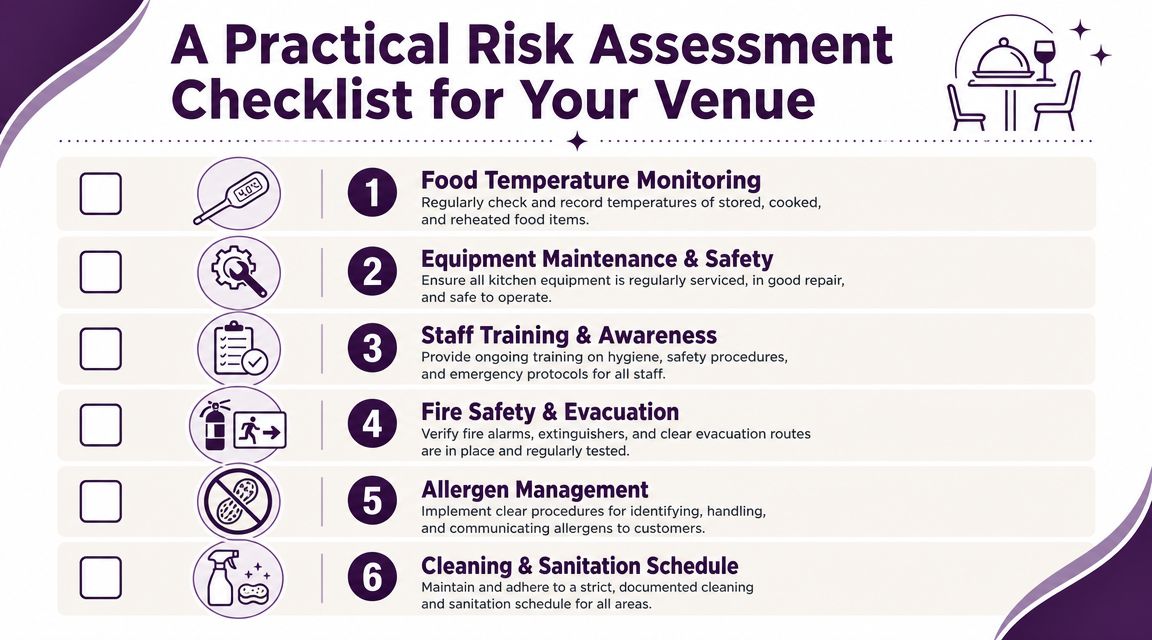
Food safety checks
Use these as direct yes-or-no questions.
- Registration and documentation: Is the business properly registered, and are the key food safety documents current, site-specific, and easy to access?
- HACCP accuracy: Does the HACCP system reflect the current menu, equipment, process flow, and staffing reality?
- Allergen control: Are allergen matrices up to date with the latest dishes and checked against supplier specifications?
- Temperature records: Are storage, cooking, cooling, and reheating records completed consistently and reviewed by management?
- Cleaning verification: Do cleaning schedules include sign-off, corrective action, and checks on whether standards were met?
- Traceability: Can you identify what was bought, from whom, and where it was used if a problem is raised?
- Staff knowledge: Could a new team member explain basic hygiene, cross-contamination prevention, and allergen escalation without prompting?
If you want a more practical sense of inspection focus, use this guide to what Environmental Health Officers look for during restaurant inspections alongside your own walk-through.
HR and workplace checks
These questions belong on the same audit because staffing failures often create compliance failures elsewhere.
- Contracts: Does every employee have written terms that match their current role and working arrangement?
- Hours and breaks: Are actual working hours and breaks recorded accurately and stored in one reliable system?
- Pay alignment: Do payslips, time records, and payroll inputs agree?
- Leave records: Can managers explain annual leave, absences, and public holiday treatment clearly?
- Manager conduct: Are disciplinary, grievance, and performance issues documented fairly and consistently?
- Training records: Can you prove induction, policy communication, and role-specific training took place?
Many operators face compliance issues. The policy exists. The rota tells a different story. The file says training happened, but the supervisor cannot show when or how it was delivered.
Business and liability checks
These questions often expose hidden weakness.
- Insurance schedule: Do current policies match your present trading model and key risks?
- Incident management: Is every customer or staff incident recorded promptly and followed up?
- Maintenance evidence: Are servicing, repairs, and safety checks documented for core equipment and facilities?
- Fire safety routines: Are alarms, extinguishers, escape routes, and staff actions checked and recorded?
- Contractor control: Can you show who attended site, what work they did, and whether it was signed off?
- Data and systems: Do booking, payment, and staff data processes have basic controls and clear accountability?
The strongest checklist is one your managers can complete accurately, without dressing the place up for inspection. If the answer is no, write down the gap, assign the fix, and set a review date. That is how risk assessment becomes operational control rather than a folder on a shelf.
Your Next Steps for Total Compliance
Don't try to fix everything at once. That usually ends with a burst of paperwork and no lasting change.
Start with one honest audit of the whole business in the next seven days. Walk the floor, check the office, review the files, and test what staff know. Use the checklist above properly. If a document exists but nobody follows it, count that as a gap.
Then identify your top three risks. Not the easiest ones to tidy up. The ones most likely to cause trouble. For one restaurant that might be allergen control. For another it might be working-time records, incident logging, or insurance that no longer matches the operation.
Then assign ownership and deadlines. Every risk needs one named person, one action, and one review date. Without that, compliance stays theoretical.
Keep the standard simple. Your restaurant should be able to produce the right records, show the right routines, and answer the right questions on an ordinary day. That's the goal. Not perfection. Control.
If your audit shows gaps in food safety systems, WRC records, staffing processes, or day-to-day operational control, Beacon Recruitment offers hospitality support across recruitment, compliance, and consulting for Irish venues that need practical structure rather than more generic advice.
Is Your Restaurant Hiding Compliance Gaps?
From outdated HACCP plans to missing WRC records, fragmented systems leave you exposed. Book a Free Consultation with Beacon today to audit your venue and protect your operation.