August 4, 2026
How to Retain Hospitality Staff Ireland: Your 2026 Guide
Discover how to retain hospitality staff Ireland in 2026. Our guide offers managers practical strategies for feedback, scheduling, and building a team that

You're on shift, the floor is busy, the kitchen's already under pressure, and then the text lands. A solid supervisor or a key chef is gone, maybe with one sentence and no real warning. The scramble starts immediately, rosters need reworking, service levels dip, and everyone left behind feels it.
That's the reality behind how to retain hospitality staff Ireland. It's rarely one dramatic failure, it's usually a chain of small operational problems, repeated often enough that good people decide they've had enough. Retention in Irish hospitality isn't a soft HR topic, it's a daily operating system issue, and the venues that get this right usually do the basics better than everyone else.
If you want a broader framework for that mindset, it's worth reading the insights for people operations from Firacard alongside your own review of shift design, onboarding and manager behaviour. The important point is simple, retention follows systems, not speeches.
The Revolving Door The True Cost of Staff Turnover
A manager gets a resignation text on a Thursday afternoon, and by Friday morning the roster has turned into a puzzle with missing pieces. The person leaving was the one who knew the till quirks, could calm a difficult table, and stepped in when the dinner rush went sideways. Now the rest of the team has to absorb the load, and that never stays invisible for long.
Why turnover hurts more than the exit itself
Turnover does not just create a vacancy, it creates a chain reaction. Someone has to recruit, interview, train, supervise, and then cover the gap while the new hire learns the basics. Service slows, confidence drops, and managers start spending time patching holes instead of running the venue properly.
That is why retention is a profit issue, not a people-plaster. In hospitality, the actual cost of a leaver is often hidden in overtime, rushed inductions, weaker upselling, sloppy handovers, and the strain placed on the staff who remain. Once that strain becomes normal, morale sinks and the next exit becomes easier.
Practical rule: if a resignation triggers panic, the business has been depending on one person for too much of the operation.
The better question is not how to replace them quickly. It is what in the system made a decent person feel they had to leave. That question matters because retention problems in hospitality usually sit in the way the venue is managed day to day. For a useful external perspective on people systems, the insights for people operations piece is a solid reminder that retention follows structure, not speeches.
The Irish context is changing too. Fáilte Ireland's 2025 Labour Market research found that the share of employers reporting considerable difficulty hiring managers and supervisors fell from 55% in 2021 to 29% in 2025 ThinkBusiness summary of Fáilte Ireland's research. The pressure has eased, but that does not mean the people problem has gone away. It means operators have a better chance to fix the basics properly.
Why Traditional Retention Tactics Are Failing in Ireland
A pay rise helps when pay is the problem. A team night out helps when morale is flat. Neither one fixes a rota that changes late, a manager who gives inconsistent instructions, or a workplace where people can't plan their lives.

The real drivers sit deeper than pay
Irish research on hospitality retention keeps pointing to the same causes of turnover, wages, work-life balance and motivation. One Irish academic study concluded that high turnover is driven by low wages, inadequate pay and poor work-life balance, and it recommended regular training, better wages, employee recognition and career advancement as the most effective responses NCI repository. That lines up with what operators see on the ground. People rarely leave because one shift was bad. They leave because too many shifts feel bad in the same way.
The core problem is that hospitality work is highly exposed to routine friction. Late finishes, unpredictable covers, weekend pressure, split shifts and weak supervision all chip away at trust. If the manager treats every resignation as a motivation issue, they miss the operational causes that pushed the person out.
The same Irish research also found that employer branding, manager support, flexible time, communication and inclusive practices improve commitment and reduce turnover, especially when retention tactics are matched to age group and role NCI repository. That matters because a one-size-fits-all approach doesn't work. A student on weekends, a sous chef, and a front-of-house supervisor are responding to different pressures.
The labour market has changed the standard
Operators who still rely on “this is just hospitality” thinking are working with an outdated model. Staff now compare venues on predictability, leadership, and whether the job fits the rest of their life. That's why generic perks often underperform. They feel nice, but they don't remove the causes of frustration.
The practical fix is to stop treating turnover like a single event. It's usually the outcome of repeated failures in scheduling, training, supervision, and communication. Once you accept that, the solutions become clearer and much more operational.
The First 90 Days A Practical Retention Blueprint
The first 90 days decide far more than most managers admit. If a new starter is unclear on the basics, unsure who to ask, or constantly catching up on missing context, they will start looking elsewhere before they have had a fair chance to settle. On a busy floor or in a pressured kitchen, that turns a training gap into a retention problem. Onboarding has to work like a control loop, not a welcome gesture.

Day one needs more clarity, not more enthusiasm
The first shift should answer the same practical questions every time. What uniform is expected, who the person reports to, when breaks happen, how shift swaps are handled, and who to contact if there is a problem. Beacon's Ireland-focused guidance on staff retention recommends exactly that kind of setup, with day-one clarity, assigned shadow training, written SOPs and formal 30, 60 and 90-day check-ins Beacon Recruitment staff retention guidance.
That structure works because it removes ambiguity before it turns into resentment. If people have to guess the rules, they usually guess wrong. A written handover sheet, a named trainer, and a clear escalation route are simple fixes, but they stop a lot of early frustration.
For HR and L&D teams, a practical companion resource is this guide for HR and L&D teams from VideoLearningAI, especially if you want to turn standard procedures into repeatable onboarding content. Video helps because it keeps the basics consistent, even when the rota changes and managers are busy.
Use the 30, 60 and 90-day check-ins properly
A check-in only works if it separates three things, training gaps, role-fit issues and roster pressure. At 30 days, ask whether the person understands the service sequence, cash handling, opening and closing routines, and manager approvals. Ask what still feels awkward as well, because that usually exposes missing training faster than a formal performance review. If someone cannot explain the basics back to you, the problem is not always attitude, it is often incomplete induction.
At 60 days, move to workload and rhythm. Ask whether the rota is predictable enough, whether handovers are clean, and whether the pace of service matches what was described at hiring. If a good person is still struggling here, the issue may be process, not attitude. A weak handover, poor station design or uneven supervision can create the same symptoms as low commitment.
At 90 days, make the conversation blunt and useful. Ask what would make the job sustainable for the long term, what support they still need from the manager, and whether the role is matching the expectation set at the start. That is the point where you learn whether the problem is fit, supervision or a broken first-month experience. If the answers are vague, keep the conversation grounded in specific incidents, not general impressions.
If a new starter is still “finding their feet” after three months, something in the onboarding system is missing or inconsistent.
If you want a legal and practical employer lens on probation structure, Beacon's probation period guidance for employers in Ireland is useful reading because probation and retention should work together, not separately. A probation process should confirm capability and support, not only filter people out. It should also give managers a clear record of what was covered, what was missed, and what still needs attention.
Build a Fair and Predictable Work Environment
A rota can keep a venue steady, or it can drive good people out. Staff will cope with busy services and the odd difficult week, but they notice quickly when schedules change late, weekends keep landing on the same names, and the reliable people are used as the default cover for every gap. Once that pattern becomes normal, trust in management starts to slip.
Rota quality control beats ad hoc fixing
Consistency is the starting point. Publish rosters on time, respect stated availability, and stop changing shifts casually after the schedule has gone out. If planning is treated as optional, employees stop organising their lives around the job, and every late adjustment feels like a sign that their time matters less than the shift.
Fairness needs a paper trail. Review late closes, early openings, weekend duties and split shifts, and check whether the same staff keep carrying the hardest patterns. That kind of imbalance wears people down fast, and it also tells them they are taking on more than their share without any proper recognition.
A clear staff handbook helps here because it sets the rules before the pressure starts. Beacon's guidance on creating a staff handbook in Ireland is useful for turning rota rules, availability expectations and basic workplace standards into something managers can point to instead of relying on memory or goodwill.
Review the real pressure points, not the excuses
Reliable staff are often the first people asked to cover gaps, stay late, or rescue a weak plan. It may look efficient in the moment, but it slowly drains the people you can least afford to lose. The message inside the team is hard to miss, being dependable means being overused.
A proper retention review should be direct.
- Which resignations came after a run of unfair scheduling? That points to the rota as a likely cause of avoidable exits.
- Which managers attract repeated complaints about tone or inconsistency? That points to supervision, not headcount.
- Which teams feel stretched every weekend or after a late change? That shows where burnout is starting.
The strongest venues treat rota stability as a management standard, not a nice extra. Weekly reviews of absence patterns, pinch points and last-minute cover requests help managers see the problem early, and so do regular stay interviews and exit-pattern reviews. That is the level of control that keeps the schedule from becoming a daily source of friction.
Implement Meaningful Recognition and Career Pathways
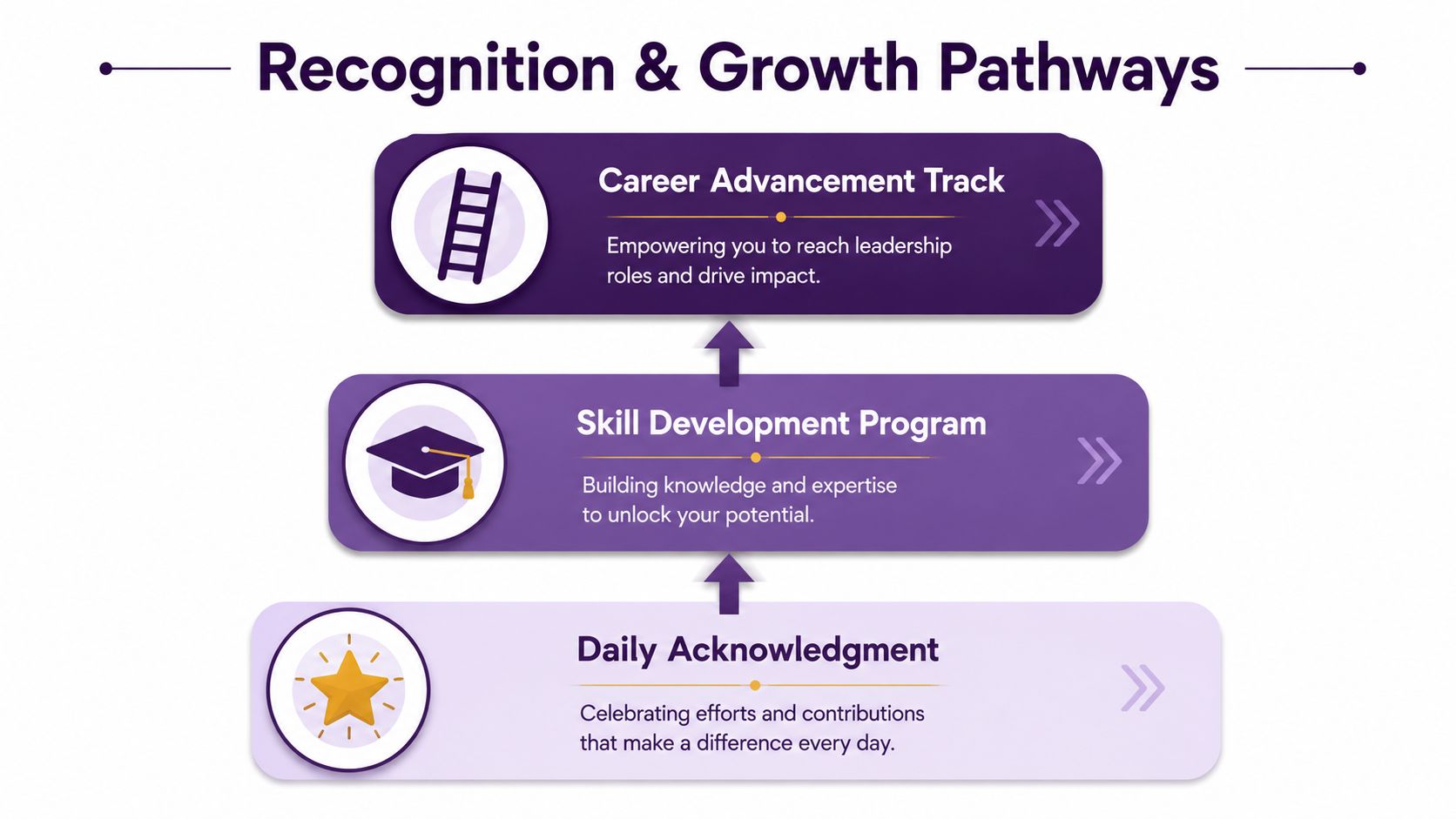
Once the basics are in place, people stay longer when they can see progress and feel noticed. Recognition doesn't have to be loud, and career pathways don't need a big corporate structure to work. They do need to be visible, fair and linked to real development.
Recognition should be specific and immediate
Generic praise gets forgotten. Specific recognition sticks because it tells the person exactly what they did well. A supervisor who notices a calm recovery with a difficult guest, a clean closing handover, or a strong upsell under pressure is reinforcing the behaviour that matters.
That same logic should apply to training and development. Irish hospitality employers are advised to use concrete retention levers such as free meals on shift, staff discounts, flexible working hours, paid time for training and development, and extra breaks, alongside structured career paths and recognition Sage Ireland blog. These aren't glamorous perks, but they're practical and visible.
Paid time for training matters because “learn on your own time” feels like a cost transfer. If you want people to build skill, the business has to invest in the hours required to do it properly. That's especially true in roles where service standards, food safety and revenue handling all depend on repeatable habits.
Make promotion criteria clear enough to trust
Career pathways fail when people can't see what changes between one level and the next. If a team member wants to progress to supervisor, spell out the behavioural and technical standards that matter, shift reliability, service consistency, initiative, and ability to train others. If those markers stay vague, people assume promotion depends on favouritism.
A career path only works when the next step is visible before the vacancy appears.
Recognition and growth also need to be tied to the manager's own behaviour. Beacon's employee wellbeing guidance for hospitality in Ireland is useful here because wellbeing, progression and retention are closely connected in practice. A staff member who feels heard, supported and trained is much less likely to drift.
Smaller venues can do this without building a formal HR department. A simple progression sheet, monthly one-to-ones, and a habit of naming what good looks like are enough to start. The goal is for people to see a future, not just another rota.
Conclusion Making Retention Your Competitive Edge
A busy venue in Ireland rarely loses staff because of one dramatic failure. It loses them through repeated friction, unclear expectations, uneven supervision, and rotas that keep changing at short notice. The operators who hold onto good people usually have better systems. They make the first 90 days structured, keep the rota predictable, and make progression visible, then they keep reviewing what the team is saying and what the operation is showing.
That is the practical answer to how to retain hospitality staff Ireland. Treat retention as part of day-to-day management, not as a separate HR exercise. Once turnover is tracked properly, the causes become easier to see, whether the problem sits in onboarding, scheduling, line management, or a weak route into progression.
The strongest Irish operators treat retention in the same disciplined way they treat food safety or margin control. They design it, monitor it, and correct it when it slips. Clear shifts, fair treatment, useful training, and managers who give direct feedback usually do more for stability than perks that look good on paper but fade quickly in service.
That approach changes the tone on the floor. Staff stop waiting for the next bad surprise, supervisors spend less time covering gaps, and the venue becomes easier to run because people are less likely to leave at the first sign of pressure.
For operators who want help putting those systems in place, Beacon Recruitment works across recruitment and operational support, including HR and compliance, staff handbooks, and wider hospitality consulting. If you are ready to reduce churn and build a more stable team, start with strategies to improve employee retention and then visit Beacon Recruitment to talk through what your venue needs next.
Is High Staff Turnover Damaging Your Gross Profit?
Stop relying on quick-fix hiring and let Beacon build a compliant, structured retention and onboarding system for your venue.